Guide · General
Plagiarism Checking Program Costs: 10 Tools Compared
Compare 10 plagiarism checking program options by price, detection, privacy and limits, with vendor-published costs and the cheapest workable way to check.
By the Rankozo research desk · Updated November 20, 2026 · 15 min read
Sticker price is the least reliable way to shop for a plagiarism checking program. A 2025 software comparison from Wbcom Designs listed Copyscape Premium from $0.03 per search for up to 200 words, an entry point far below any monthly subscription. A figure like that stays cheap only for a buyer who submits once; rescanned revisions and long manuscripts trigger fresh charges.
For buyers budgeting in 2026, the decisive variable is what triggers another charge. Pay-per-document services bill each submission. Pay-per-search tools meter every individual check. Subscription plans set word, page, or credit allowances that reset on a billing cycle, and institutional platforms quote pricing only after a sales conversation. Writing suites split two ways: some bundle plagiarism checking into the subscription, others sell it as a paid extra.
Two apparent bargains need qualification. PlagiarismCheck.org's entry offer is a capped subscription, not a one-off document purchase, and Grammarly's lower monthly equivalent requires annual billing. Neither price is comparable with an occasional search until commitment and usage are counted.
The ten programs compared below fall into those four billing groups, and the cheapest workable option in each depends on how often you check rather than the smallest advertised number. Before buying, confirm each price on the vendor's current pricing page, because plans, credit allowances and billing terms change often.
Table of Contents
- 1. Copyscape
- 2. Scribbr Plagiarism Checker
- 3. Turnitin Feedback Studio
- 4. iThenticate
- 5. Copyleaks
- 6. Quetext
- 7. PlagiarismCheck.org
- 8. Grammarly
- 9. ProWritingAid
- 10. Originality.ai
- 10 plagiarism checking programs
- How to Pick by Cost Without Paying for Unused Checks
1. Copyscape
Best fit: occasional web-content checks without a recurring subscription. Copyscape suits an editor reviewing freelance articles or a site owner investigating duplicated pages. Its advantage is metering: buyers pay for searches instead of keeping a plan active between projects.
The Copyscape Premium price list starts at $0.03 per search for up to 200 words and adds $0.01 for each additional 100 words or part thereof. Document length drives the bill directly, and a second search on a revised draft counts as a new charge.
What the payment covers
- Draft checking: pasted text and uploaded Word or PDF files support prepublication review.
- Production workflows: batch searches, an API, and a private index support larger content operations.
- Published-page monitoring: Copysentry is a separate service, priced apart from Premium searches.
The cheapest workable use case is a short draft that needs comparison against web sources once or twice. Copyscape sits outside classroom grading and scholarly submission workflows, which are built around institutional access rather than individual payments.
Budget rule: A low search price remains low only when the buyer controls document length and repeat checks.
Editors should read matched passages rather than reject a submission on its similarity percentage alone. A match can flag an authorized quotation, syndicated content, or the publisher's own text.
2. Scribbr Plagiarism Checker
A student approaching dissertation submission has a different purchasing problem from an agency reviewing articles every week. Scribbr's per-document model avoids keeping a subscription active after the assignment is finished.
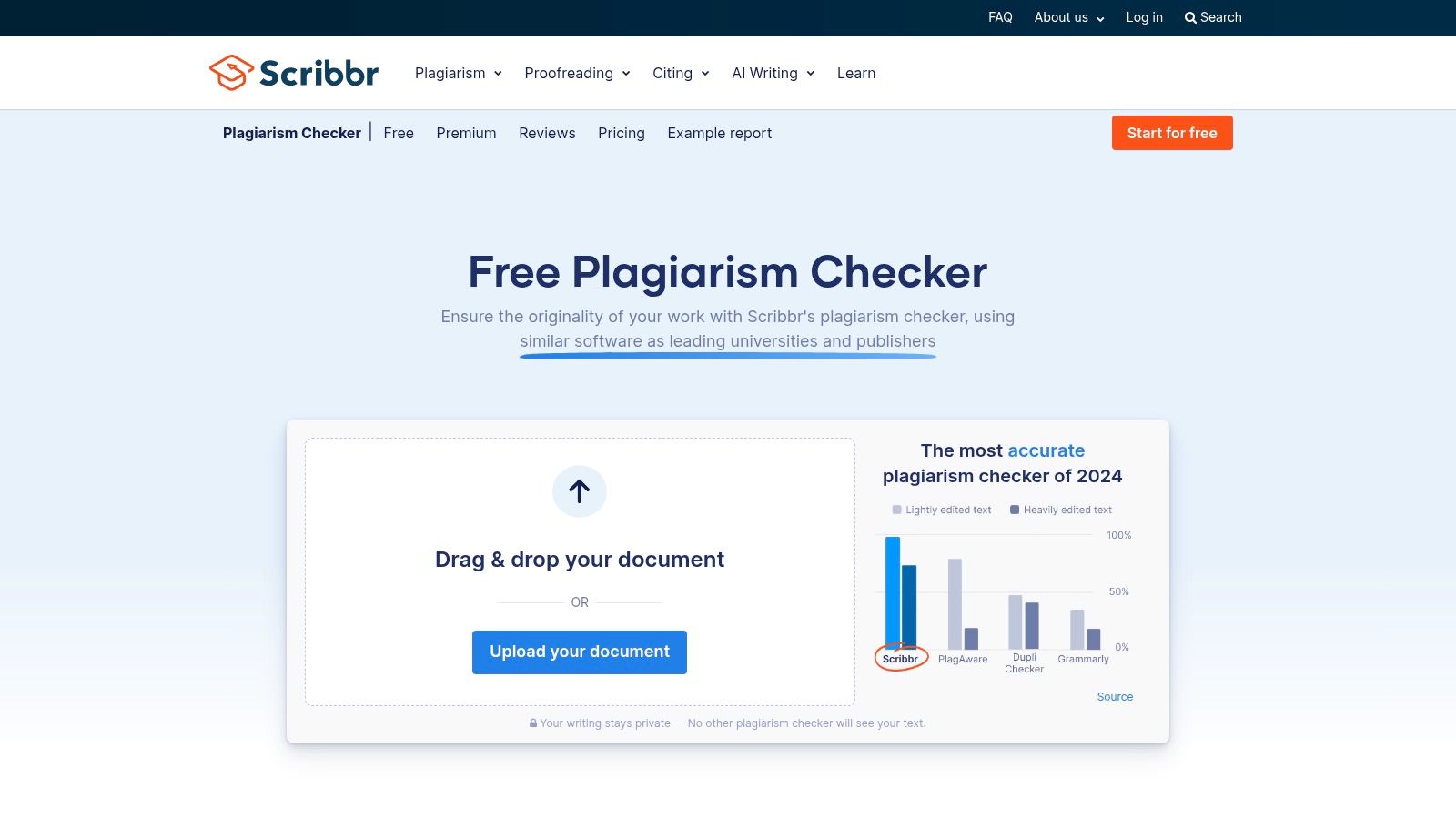
The Scribbr Plagiarism Checker page lists $19.95 for up to 7,499 words, $29.95 for 7,500 to 49,999 words, and $39.95 for 50,000 words or more, alongside a displayed 4.4/5 rating from 15,537 reviews. The rating is a vendor-displayed customer signal, not independent evidence of detection accuracy.
Where per-document pricing works
Scribbr provides similarity reporting, self-plagiarism checking, and AI-related and writing-review features. It also offers optional institutional volume pricing, so buyers should distinguish the individual document purchase from an organizational arrangement.
The privacy distinction is useful: Scribbr says uploaded submissions aren't added to its comparison database. That addresses repository inclusion, but buyers handling confidential research should still examine retention and deletion terms.
For an occasional thesis or essay, the absence of recurring billing can outweigh a higher transaction price. For repeated drafts, the arithmetic changes: a 50,000-word dissertation checked once costs $39.95, and buyers should confirm whether uploading a revised file requires another purchase rather than assuming revisions are included.
A Scribbr report also doesn't replace the receiving institution's requirements. Students need the assignment policy, not merely a reassuring score from a separate service.
3. Turnitin Feedback Studio
The cheapest workable student option may be access already provided by the institution. Turnitin Feedback Studio is an institutional purchase, not an individual subscription that students can independently compare with consumer plans.
Turnitin Feedback Studio combines similarity reporting with grading, feedback, learning-management-system integration, and classroom assignment workflows. Pricing is quote-based, so a defensible comparison requires the institution's actual proposal rather than a public monthly estimate.
Its source-matching workflow includes student submissions, web pages, and premium publications. The purchasing justification is therefore broader than generating a similarity percentage: staff also need assignment administration and a consistent review process.
Compare the workflow, not just the report
- Existing access: Enrolled students should establish whether their course already provides submission access.
- Institutional requirements: Procurement teams need clarity on integrations, report permissions, repository settings, and support.
- Review responsibility: Instructors must interpret matches before drawing conclusions about misconduct.
Turnitin's student guidance defines the similarity score as the proportion of matched text and states that there's no universal acceptable number. Correct quotations, references, and ordinary phrasing can all require contextual review.
The limitation isn't just quote-only pricing. An institution must budget for staff review and implementation as well as licensing. A cheap standalone checker isn't an equivalent replacement if it leaves those classroom tasks unresolved.
4. iThenticate
Publication-oriented manuscripts justify a different shortlist from routine blog drafts. iThenticate targets researchers, scholars, graduate students, and publishers who need scholarly similarity review rather than classroom grading.
The supplied iThenticate individual offer lists $125 for a manuscript up to 25,000 words, or $300 for up to three manuscripts or a manuscript up to 75,000 words; both packages include five revisions, and credits remain valid for 12 months; vendor-page check date not supplied.
What the higher entry price buys
The five-revision allowance is the detail that changes the math. A manuscript can go back through checking after each round of edits, so the purchase covers a review cycle rather than a single scan. Authors revising a paper across several drafts get more use from one credit than the headline price suggests.
The $300 tier serves two different buyers: someone submitting three shorter manuscripts, or someone with a single document up to 75,000 words. Spreading that cost across multiple submissions lowers the effective price per check, while the 12-month validity window removes the pressure to use credits quickly. Publishers and institutions buy separately, so an author weighing the individual package should first check whether a university or journal already provides access. Existing institutional access is the cheapest workable route when eligibility applies.
For a short, occasional marketing article, iThenticate is difficult to justify when a simpler checker meets the requirement. Its value sits in the publication workflow and revision allowance, and authors still need to review each meaningful match rather than treating a similarity score as a verdict.
5. Copyleaks
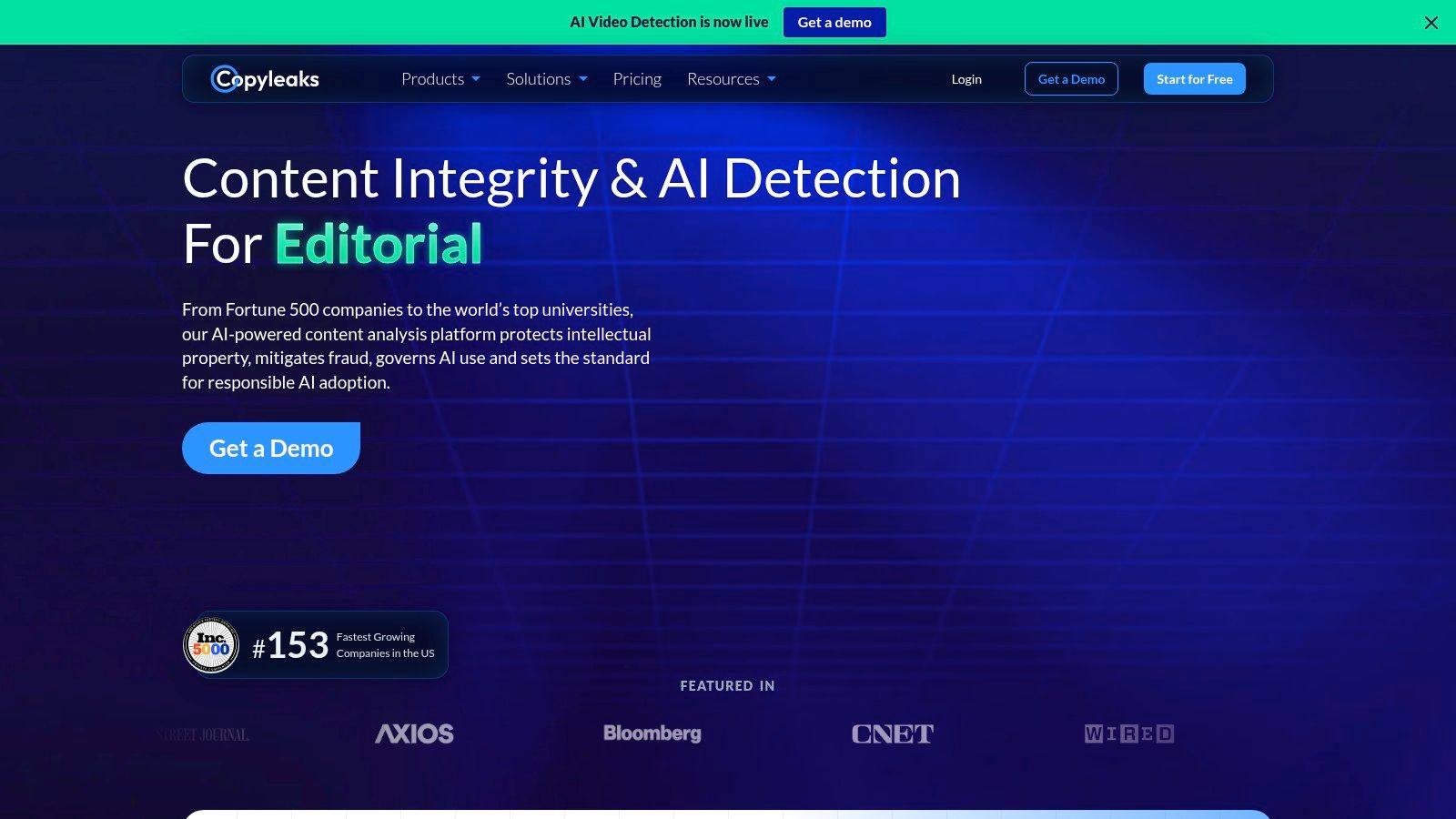
$13.99 per month, billed annually, buys a plagiarism checker and an AI detector in one subscription. That is Copyleaks Personal, and the pricing risk is upgrading to Pro for scanning features a small team rarely uses.
The Copyleaks pricing page lists Personal at $16.99 month-to-month or $13.99 per month billed annually, and Pro at $99.99 month-to-month or $74.99 per month billed annually. The page specifies plagiarism detection in more than 100 languages and AI detection in more than 30 languages. Education and enterprise arrangements require quotes rather than published rates.
Pay for the necessary scanning scope
Browser extensions, Google Docs support, and multiple-file uploads cover routine checking for a solo writer. Website scanning and cross-language comparison earn their cost only when an agency handles multilingual assignments or reviews content across a larger publishing operation.
An individual comparing plans starts with Personal. A team procurement decision should work the other way: map the required website, collaboration, and language features to a specific tier first, then compare monthly equivalents. The gap between the two annual rates is wide enough that unused features carry real cost.
A bundled AI detector and a plagiarism checker perform different jobs. A shared interface doesn't make either score proof of misconduct.
Usage limits deserve a read before purchase, since unused credits can be lost when plans change. Multilingual coverage also needs checking against the team's actual language pairs and writing types, because a broad coverage headline says nothing about any single pair.
6. Quetext
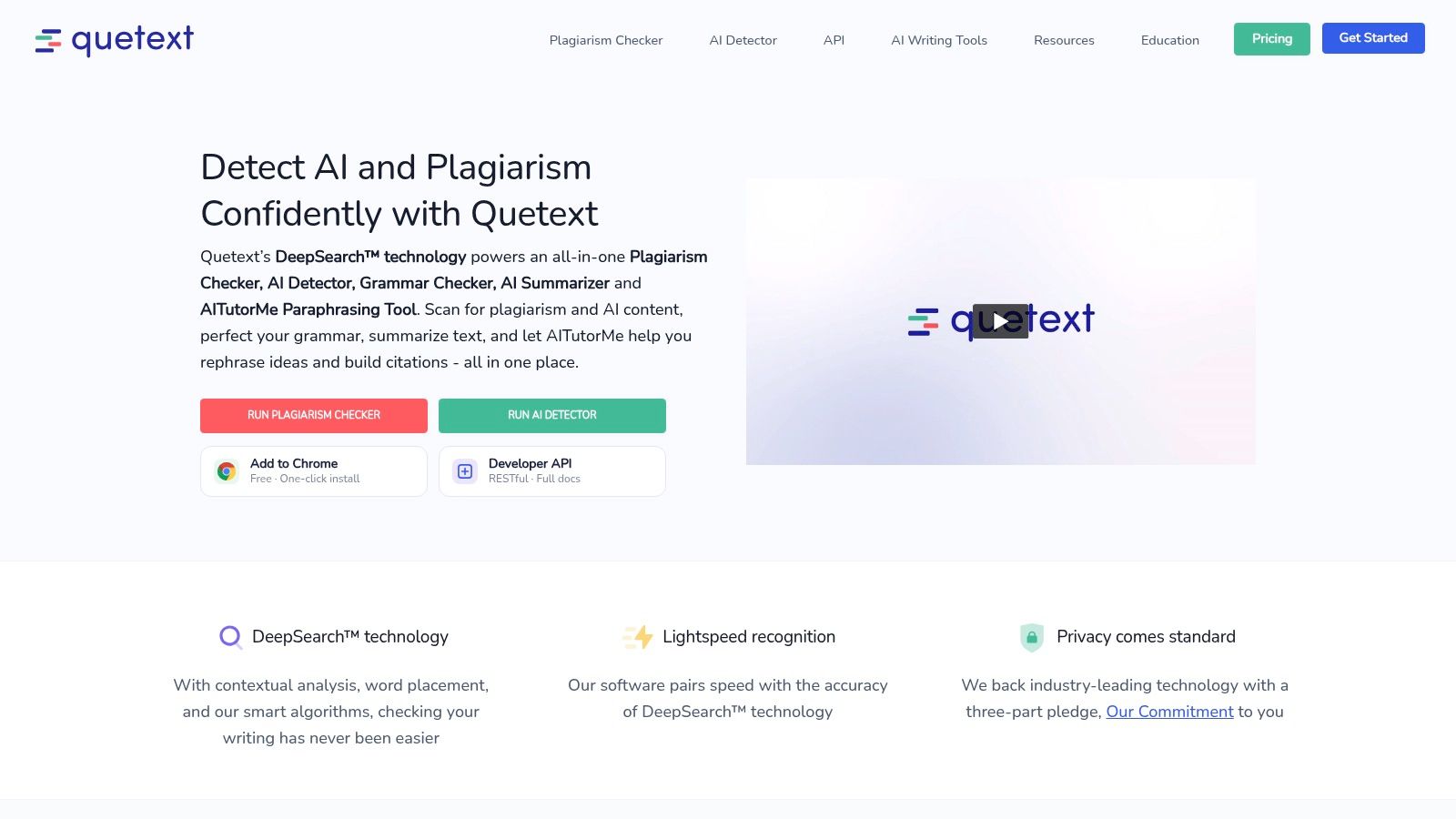
A 900-word draft can be checked before any subscription decision: Quetext allows free checks up to 1,000 words, lists Essential from $14.99 per month and Professional from $29.98 per month, and offers annual billing. That makes the free allowance the cheapest starting point when the document fits, while a paid plan becomes the comparison once length, repeat scans or workflow needs exceed it.
Citation help changes the use case
DeepSearch matching, color-coded results and a citation assistant help a reviewer see which passages need attribution instead of relying on a bare similarity percentage. Bulk uploads, team options and an API matter when checking moves from a single manuscript to a production queue.
- Best entry use: A short draft needing source-level review without immediate subscription commitment.
- Main upgrade trigger: Document volume or workflow requirements exceeding the free allowance.
- Important limit: Online processing still requires a privacy assessment for unpublished or client-confidential material.
A flagged passage is a cue to inspect the matched source and cite or rewrite it properly. Rankozo's comparison of AI paraphrasing tools for editing workflows can help with revision, but paraphrasing should not become a way to conceal source dependence.
The paid tiers are worth their monthly price when the reviewer routinely opens sources, resolves citation gaps and needs capacity beyond the free window.
7. PlagiarismCheck.org
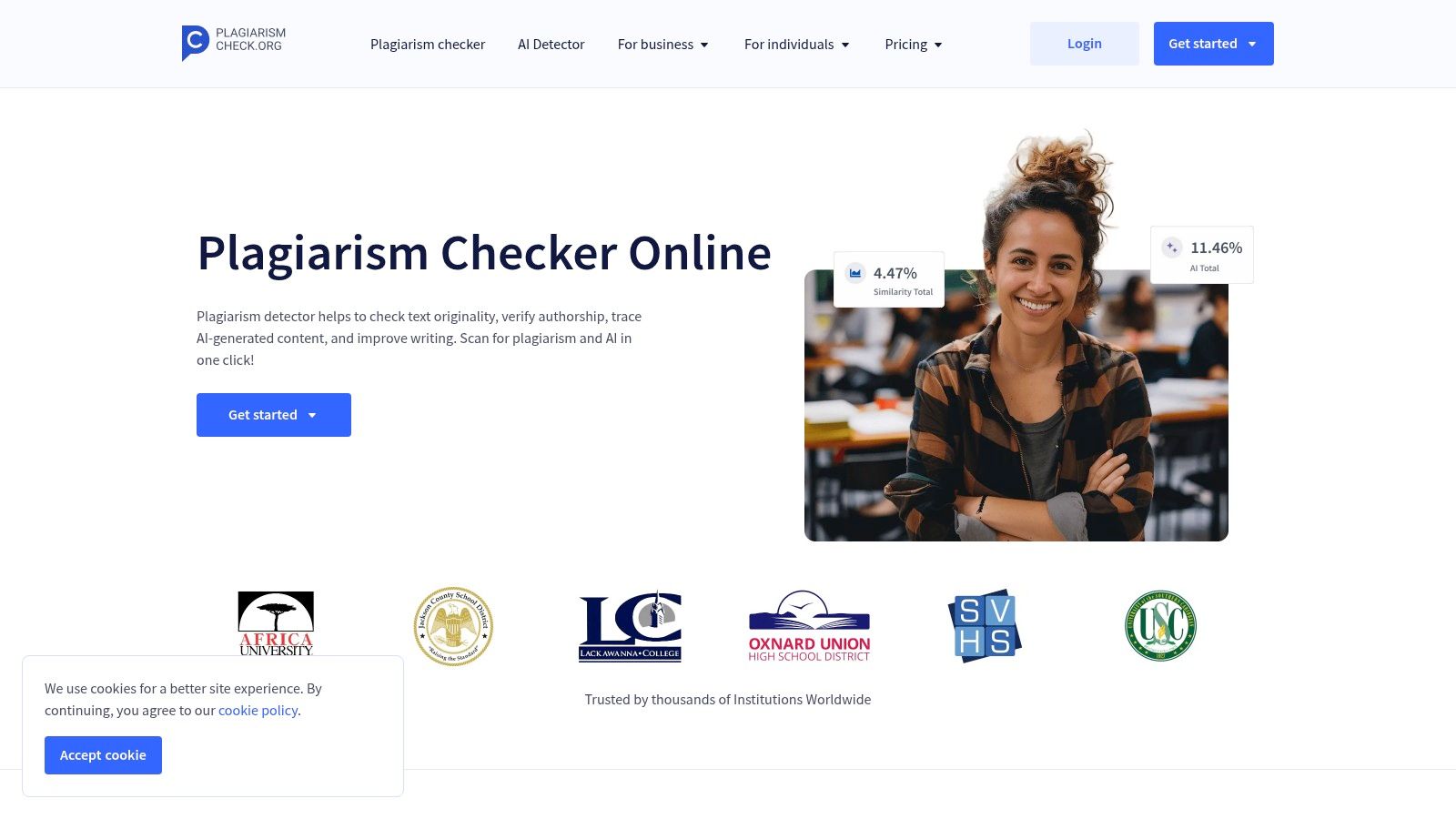
PlagiarismCheck.org is a low-entry subscription built around a monthly page allowance. The cost question is whether a finished document and its revisions fit inside that cap before another billing cycle starts.
PlagiarismCheck.org's Basic plan costs $5.99 per month or $4.25 per month billed yearly, with 20 plagiarism pages per month. The lower annual equivalent only helps if the workload is steady enough to use the allowance without wasting it.
Individual allowance or institutional workflow
For individuals, citation and grammar tools can support a light checking routine. For organizations, Google Classroom, Moodle, and Canvas integrations address assignment handling rather than simple document uploads.
An institutional document archive and authorship verification sit in organizational arrangements, so buyers should treat them as part of a separate evaluation rather than an entry-plan expectation.
- Entry-plan advantage: A smaller recurring commitment for regular but limited checking.
- Capacity constraint: Page definitions and repeated scans decide how many real documents fit.
- Procurement distinction: Institutional pricing is quote-based and belongs in a separate comparison.
The practical comparison is the cost of completing the checking workload, not the cost of opening an account. An author revising one long manuscript can exhaust a capped plan faster than a freelancer checking short finished pieces.
Before choosing annual billing, document expected submission sizes and rescan habits. A lower monthly equivalent is not a saving if the allowance runs out mid-project.
8. Grammarly
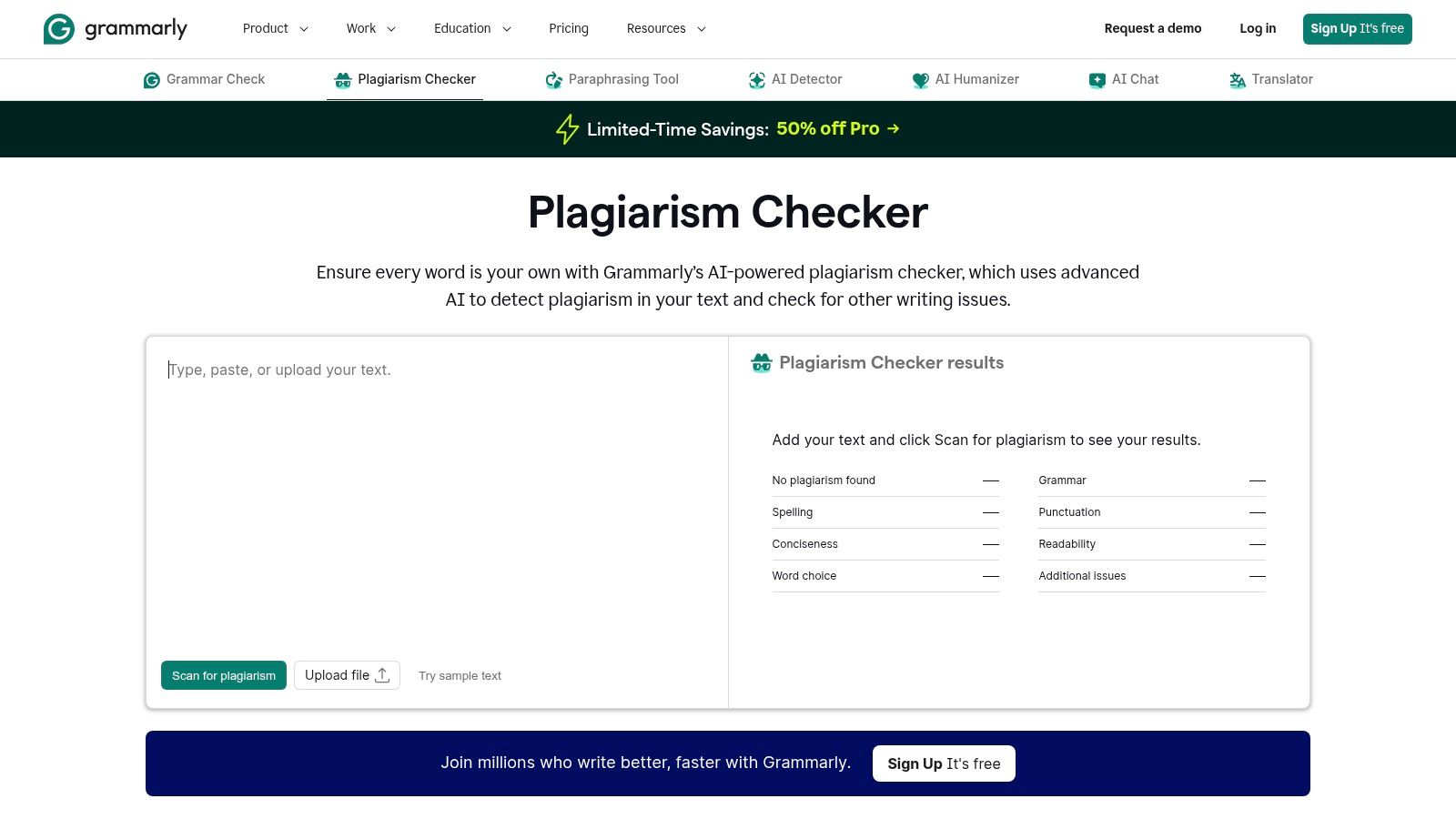
Grammarly makes the strongest cost case when the buyer also needs editing assistance. A writing-suite subscription is harder to justify solely for an occasional similarity check.
Grammarly Pro costs $12 per member per month billed annually or $30 month-to-month. The annual monthly equivalent is less than half the flexible rate, but it locks in a year of payments for a bundle that includes far more than scanning.
Paid-plan features include matched-sentence highlighting, source references, plagiarism and AI-related checks, and citation suggestions in MLA, APA, and Chicago styles. Grammar, spelling, and style support provide the broader reason to maintain the subscription.
Separate editing value from checking value
A freelancer already working inside Grammarly-supported workflows avoids paying for a second interface. A procurement team buying only plagiarism detection should instead compare scanning capacity and reporting against specialist services, because the per-member fee buys editing features they will never open.
- Bundled benefit: Editing and source review happen within the same writing workflow, so one subscription covers two needs.
- Main limitation: Paid access does not make Grammarly an institutional replacement for Turnitin.
- Alternative route: Buyers needing only editing can compare free grammar checkers before committing to a paid bundle.
The cheapest workable choice depends on what the buyer would otherwise purchase. Counting unused writing features as savings produces a misleading comparison. The relevant benefit is a tool the writer will use daily, alongside source matches an editor can inspect.
9. ProWritingAid
ProWritingAid separates the editing subscription from ongoing plagiarism-check purchases. Buyers who overlook that distinction can compare its editing price against competitors' plagiarism-inclusive plans and reach the wrong conclusion.
The ProWritingAid plagiarism checker page lists checks of up to 2,000 words per credit, gives free users two initial checks, and shows Premium from $10 per month billed yearly without ongoing plagiarism credits. Further credits are sold separately in packages priced on the vendor's site, so the total cost depends on how many credits a buyer needs.
Calculate the add-on before buying the suite
ProWritingAid combines style and editing reports with a Word add-in and subscription choices suited to ongoing writing. Its plagiarism checking compares text with web pages, published works, and academic papers.
The cheapest entry route is the initial free checking allowance when the task fits inside 2,000 words. Two checks cover a pair of short articles or one article plus a revision pass. Beyond that, the add-on credit packages determine the price, and those packages cost extra on top of Premium.
Comparison safeguard: An editing subscription price isn't a plagiarism-checking price when scanning credits are sold separately.
Long-form authors should pay particular attention to how a credit maps to manuscript length. A 60,000-word draft, for example, needs thirty credits' worth of capacity at the 2,000-word limit, and revisions may require further checking.
ProWritingAid can suit an author who wants its editing environment and only occasionally needs originality review. It shouldn't be labeled cheaper than a specialist checker without including the additional credits required for the intended workload.
10. Originality.ai
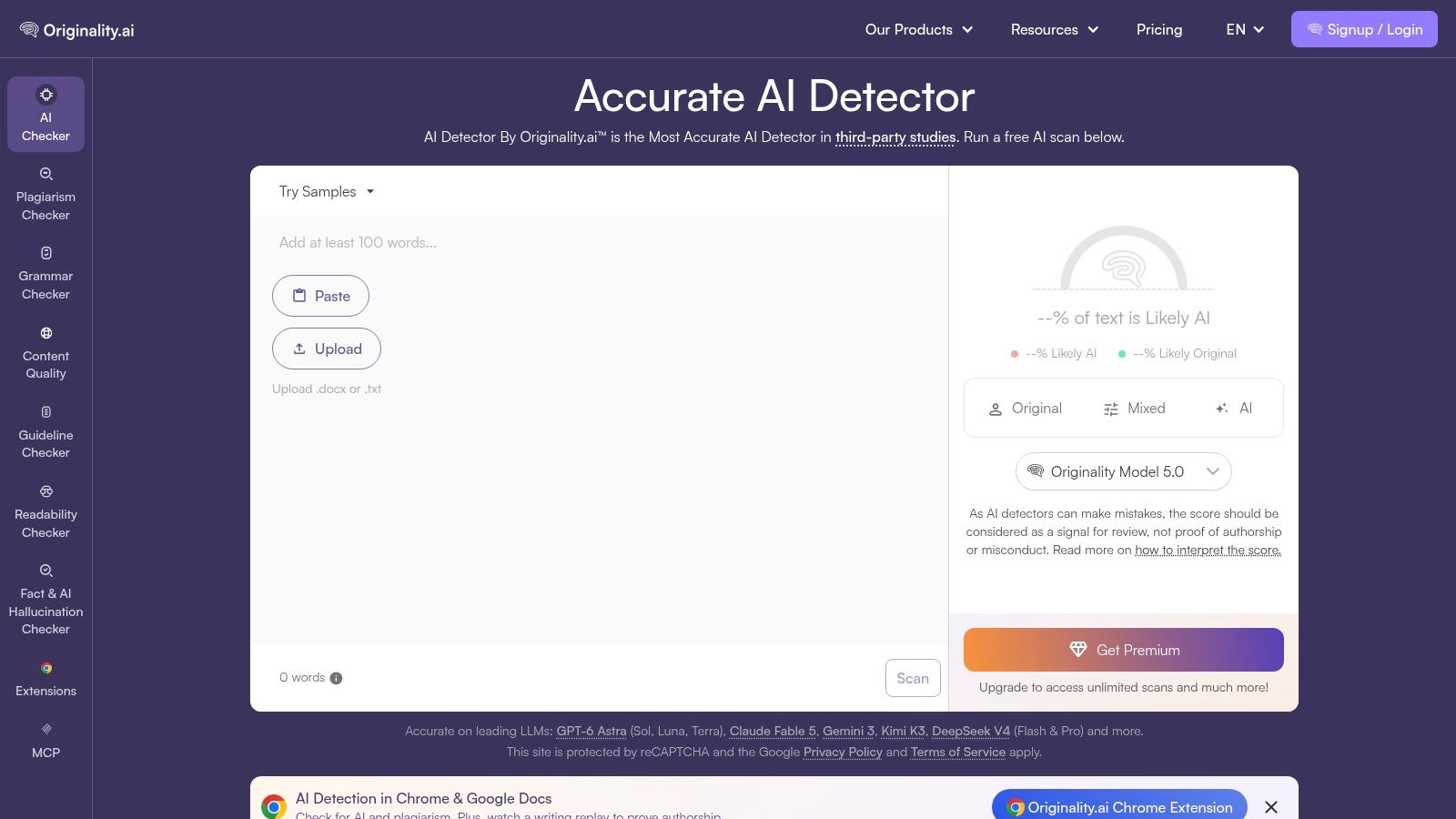
Originality.ai prices for publishing teams, not classrooms. The Originality.ai pricing page lists Pro at $14.95 per month or $12.95 per month billed annually, including 2,000 monthly credits, and Enterprise at $179 per month or $136.58 per month billed annually, with API access included in Enterprise. Document uploads, website scans, team management, and editorial checks target agencies assessing a recurring content queue rather than instructors reviewing assignments.
Credits need a workload definition
One subscription covers plagiarism, AI-content, readability, and related checks, and credit consumption varies by check. A buyer who assumes 2,000 credits converts into a fixed article count will budget wrong, so the first step is defining which analyses staff run on each piece of content.
- Team advantage: Website scanning and shared review capabilities address repeat publishing work.
- Billing risk: Subscription credits expire monthly, so unused capacity isn't a permanent reserve.
- Upgrade question: Enterprise makes sense only when its organizational capabilities, including the API, are needed.
AI scores require separate interpretation from source matches: a similarity report flags overlapping text, while an AI score estimates likely authorship, and the two answer different editorial questions. Rankozo's comparison of free AI detectors gives agencies a second reference point before committing budget to a plan.
Cheapest workable option: Pro billed annually covers an agency whose required checks fit inside the monthly credit allowance. Enterprise at $136.58 per month billed annually pays off only when API access and team-scale features are used, since buying a larger tier for an occasional workload spike leaves paid capacity idle during quieter months.
10 plagiarism checking programs
The stated entry points run from Copyscape's $0.03 charge for the first 200 words to iThenticate's $125 manuscript fee, with Turnitin quote-only. Read each price beside its billing unit, because a search, a document, a seat, and a credit allowance buy different amounts of work.
| Cost model | Starting price (vendor) | Free option | Best for |
|---|---|---|---|
| Pay as you go | $0.03 for the first 200 words (Copyscape) | None stated | Occasional web-content checks and website monitoring |
| Per document | $19.95 per document (Scribbr) | None stated | Students checking essays, theses, and dissertations |
| Institutional, quote-based | Quote required (Turnitin) | None stated | Schools and universities reviewing assignments |
| Submission credits | $125 per manuscript (iThenticate) | None stated | Researchers, scholars, and publishers checking manuscripts |
| Subscription | From $13.99 per month, billed annually (Copyleaks) | None stated | Individuals and teams needing plagiarism and AI checks |
| Subscription with free tier | From $14.99 per month (Quetext) | Checks up to 1,000 words | Users seeking similarity checks with citation tools |
| Subscription | From $4.25 per month, billed yearly (PlagiarismCheck.org) | None stated | Individuals and education teams using LMS integrations |
| Subscription | From $12 per member per month, billed annually (Grammarly) | Plagiarism checking requires a paid plan | Writers who want plagiarism checks alongside editing |
| Subscription plus separate plagiarism credits | Premium from $10 per month, billed yearly (ProWritingAid); plagiarism credits cost extra | Two initial checks | Authors and editors seeking style feedback and occasional checks |
| Subscription with credit-based usage | From $12.95 per month, billed annually (Originality.ai) | None stated | Publishers and content teams checking web content at scale |
The lowest sticker is not automatically the lowest spend: Copyscape prices a small web search, Scribbr and iThenticate sell one reviewed document, and Grammarly or ProWritingAid attach checking to a broader writing plan. Match the unit to the job first, then compare tiers inside that model.
How to Pick by Cost Without Paying for Unused Checks
Occasional checking favors transaction-based purchasing. A buyer running a handful of scans a year pays less per document with Copyscape or Scribbr than for twelve months of a subscription, and a researcher checking a single manuscript through iThenticate avoids an ongoing plan entirely. The cheapest workable option is the smallest purchase that covers the actual source-matching need.
Volume flips the comparison. Regular but light users should weigh capped subscriptions such as PlagiarismCheck.org and Quetext against ordinary monthly usage, while agencies can test Originality.ai and Copyleaks against their content queue, collaboration requirements, and whether AI detection matters alongside similarity checking. Classrooms face a different structure: Turnitin is an institutional workflow sold through quotes, built for schools reviewing assignments rather than individuals buying a single scan.
Compare the cost of finishing the job
- Repeat scans: Include checks of revised drafts alongside the initial submission, since a single-check budget underestimates revision-heavy work.
- Expiring allowances: Match monthly credits to ordinary usage rather than an unusually busy period.
- Quote-only contracts: Compare implementation, integrations, access, and review responsibilities alongside licensing.
- Writing bundles: Count editing features as value only when staff would otherwise need them. Grammarly and ProWritingAid sell similarity checking inside broader writing suites, and ProWritingAid charges for plagiarism credits separately on top of its subscription.
- Confidentiality: Examine retention, repository inclusion, deletion controls, and data handling before uploading sensitive text.
Privacy terms belong in the price comparison. An Academy of Sciences Malaysia journal study published in 2025 identified privacy and ethical implications among concerns surrounding automated plagiarism assessment. A low-priced scan can be unsuitable when its handling terms do not fit unpublished research or confidential client work.
Detection scores carry a review cost too. Queen Mary University of London's Turnitin policy advises against a fixed similarity threshold for deciding which reports receive review, because assignment characteristics affect interpretation. Visible source matches, useful exclusions, and exportable reports give reviewers more to work with than a reassuring headline percentage.
Before purchasing, record expected document lengths, checking frequency, revision needs, and privacy requirements, then match that profile to the smallest suitable plan. Per-document pricing fits rare checks, a capped subscription fits steady light use, credits or scale plans fit agency volume, and an institutional quote fits a school.
Questions or corrections: editorial@rankozo.com