Guide · General
10 HRIS Payroll Systems Compared on Price and Features
Compare 10 HRIS payroll systems on HR capabilities, payroll features, integrations, and real cost, with prices quoted and dated from vendor pages.
By the Rankozo research desk · Updated November 13, 2026 · 17 min read
Across the HR and work tools tracked in Rankozo's price index, the median starting price of a paid plan is $9 per month, measured across 16 verified prices, and the cheapest paid tier is Clockify at $3.99 per seat per month, checked November 4, 2026 against vendor US pricing pages. Both figures sit far below what an employer spends to run payroll, and that gap is the whole story. The distance between a published entry price and a signed invoice is where this comparison lives.
The ten systems below fall into two pricing camps. Gusto and OnPay publish per-person plan prices plus a menu of add-ons anyone can read. ADP, Paychex, Paylocity, Paycor and UKG quote instead, so their cost appears only after a scoping call. Rippling and BambooHR sit between the two, publishing parts of the stack while leaving payroll to a quote.
What separates a $40 monthly bill from a $400 one is rarely the base plan. It's the per-employee rate applied to headcount, the tier that includes multi-state tax handling or time tracking, the charge per off-cycle run, and the implementation fee that never appears on a pricing page.
Each system here gets assessed on four things: HR capability, payroll depth, integrations and cost transparency. Nothing below comes from a trial account or a demo login. Prices and inclusions are drawn from vendor pages and named public sources, with the check date attached so you can see how stale the number is.
Table of Contents
- 1. Gusto
- 2. OnPay
- 3. RUN Powered by ADP
- 4. Paychex Flex
- 5. Rippling
- 6. BambooHR
- 7. Paylocity
- 8. Paycor
- 9. UKG Ready
- 10. Rankozo
- HRIS payroll systems compared
- How to Pick the Cheapest Workable HRIS Payroll System
1. Gusto
Gusto is one of the two entries here that publishes plan prices on its own site, which means a budget can be built before a sales conversation starts. Payroll, tax filing, year-end forms, benefits administration, onboarding, employee self-service and PTO sit inside one product, and the pricing page lists month-to-month terms with unlimited payroll runs. For a U.S. employer with a handful of salaried staff, that's the shortest path from a price list to a working payroll.
What pushes the Gusto bill up
- Per-person rates applied to headcount. The entry price assumes a small team. Every hire raises the monthly total, so the number on the pricing page stops being your number at around the fifth employee.
- Tier gating. Multi-state payroll, time tracking and HR guidance sit in higher plans or paid add-ons. Budget the tier you'll need in twelve months, not the one that fits this week's payroll.
- Benefits calculated, not funded. The Bureau of Labor Statistics Employer Costs for Employee Compensation counts wages and salaries plus a separate benefits component covering 18 benefit costs, paid leave included. Gusto administers the deductions; the obligation stays on the employer's books.
Ask before comparing: which plan carries multi-state tax registration and time tracking for the headcount you expect in a year, and what the per-person rate becomes above that threshold.
The limits here are scope, not quality. This is a U.S. small-business system rather than a full global HRIS, so an employer with foreign entities needs a second provider and a second line in the budget.
2. OnPay
OnPay is the second public-price entry: a base payroll price plus separately listed add-on prices for HR, time tracking, compliance resources and live HR support. The published base is packaged around core payroll rather than itemized per feature, which matters because quote-only vendors routinely split those functions into separate line items. The comparison starts closer to apples to apples than usual.
The free payment rail under the paid service
Federal tax deposits don't require a vendor at all. Employers must deposit federal payroll taxes electronically, the IRS runs free payment channels for that purpose, and banks, payroll services and tax professionals may charge fees for handling the same transfers. OnPay's tax line buys the calculation, filing and schedule management around the deposit; the transfer itself is free.
That distinction is worth real money when two quotes differ by a tax-service fee. Scheduling deposits through a free channel looks cheaper on paper, yet the employer stays liable for the deposit schedule whoever runs it, and late or missed deposits draw penalties. A vendor charging for that work is selling the risk transfer, so weigh the fee against the liability rather than counting the free channel as a saving.
- Payroll-first base. Broader HR functionality costs extra, so price the add-ons you'll switch on rather than the headline rate.
- Cost scales with people and modules. The published base assumes a small headcount with nothing added; every module switched on and every hire moves the monthly total.
- Scope ceiling. Deep talent management and enterprise HR functions need a different class of suite.
For the total picture beyond the subscription, what payroll really costs a small business breaks out the costs that sit outside the software fee in a seven-minute read.
3. RUN Powered by ADP
RUN is ADP's small-business payroll platform, sold in packages rather than at a published price. Payroll processing and federal, state and local tax filing form the core. Onboarding, time and attendance, benefits, live HR support and training arrive through higher package levels. The vendor offers payroll support and a self-guided demo, which is what a buyer gets before a quote: a walkthrough, not a number.
Why the package ladder matters
Payroll records are the raw material of official statistics, which makes them a fair test of accuracy. The Bureau of Labor Statistics Current Employment Statistics program collects monthly employment, hours and earnings information directly from establishment payroll records, and large multi-establishment employers can submit electronic files covering 50 to hundreds or even 1,000 or more worksites. A platform that can't export clean, consistent records across locations creates reconciliation work at the finance end, whatever it charges per run.
A package comparison that ignores export formats and multi-location reporting is comparing the wrong things.
The practical risk with a tiered product is paying for the tier above the one you need, or the reverse: buying standard payroll and discovering that time and attendance, benefits and HR support were priced as separate services.
- No published price. Standard package prices aren't listed, so every comparison depends on the quote you extract.
- Run frequency affects fees. More frequent payroll cycles can increase fees, which matters if you pay weekly.
- Tier-dependent HR. HR features differ by package, so inclusions need line-by-line comparison rather than a total.
4. Paychex Flex
Paychex Flex sells payroll plus optional benefits, time and attendance, hiring and HR support, packaged by service level. Pricing is quote-based, so the work starts with a scoping question rather than a price page: which package covers multi-state tax filing and automated tax calculations, and what does the next tier add. Businesses can start with payroll and add services later, which is convenient until the second contract year arrives with a different number on it.
The deposit calendar decides the software requirement
Tax filing quality is measurable, and the calendar is where to measure it. For 2026, the IRS Instructions for Form 941 set the semiweekly depositor threshold at more than $50,000 in total employment taxes reported during the lookback period, which runs July 1, 2024 through June 30, 2025. Employers at or below that figure use the monthly schedule. Under the semiweekly rule, taxes on wages paid Wednesday through Friday are due by the following Wednesday, and taxes on wages paid Saturday through Tuesday are generally due by the following Friday.
A system that can't apply both the employer's historical liability and the actual pay date to that calendar will default to one schedule. Ask the sales team to show the tax calendar configured for a semiweekly employer running weekly pay, and whether changing pay frequency triggers a re-quote.
- Quote-only pricing. Quick comparisons aren't possible without a scoping call, so run two vendors in parallel.
- Package sprawl. The range of packages and optional services makes careful scope review essential.
- Support levels vary. Service and support terms can change with the package chosen.
Per-employee pricing is what moves the total as you hire, and payroll cost statistics show how the components stack up before you sign.
5. Rippling
Rippling is modular by design. HR records, payroll, benefits, time and, in some configurations, IT and finance workflows get selected separately, employee data drives automated workflows across whichever systems are switched on, and the vendor describes importing year-to-date data from a prior payroll provider. Payroll isn't sold as a standard public plan, so cost depends on headcount and the modules in the basket.
That structure suits a company that wants one employee record feeding several processes. It also makes two Rippling quotes hard to compare, because the module list is the price.
One exception rule to test in any demo
Deposit engines need an escalation rule that most demos skip. Under IRS Notice 931, if an employer accumulates $100,000 or more in federal employment-tax liability on any day during a monthly or semiweekly deposit period, the deposit is due by the close of the next business day regardless of the normal schedule, and the threshold is applied before reducing the liability for nonrefundable credits. Software that only follows the employer's monthly or semiweekly setting will miss that deadline.
In a modular purchase, confirm which module owns the cumulative liability calculation and whether it ships in the base payroll product or an upgrade.
- No standard payroll price. Costs depend on employee count and selected modules, so ask for the same module list from every bidder.
- Breadth beyond need. A small company that wants basic payroll can end up paying for workflow automation it never configures.
- Comparison difficulty. Configurable products reward buyers who write the scope down first.
6. BambooHR
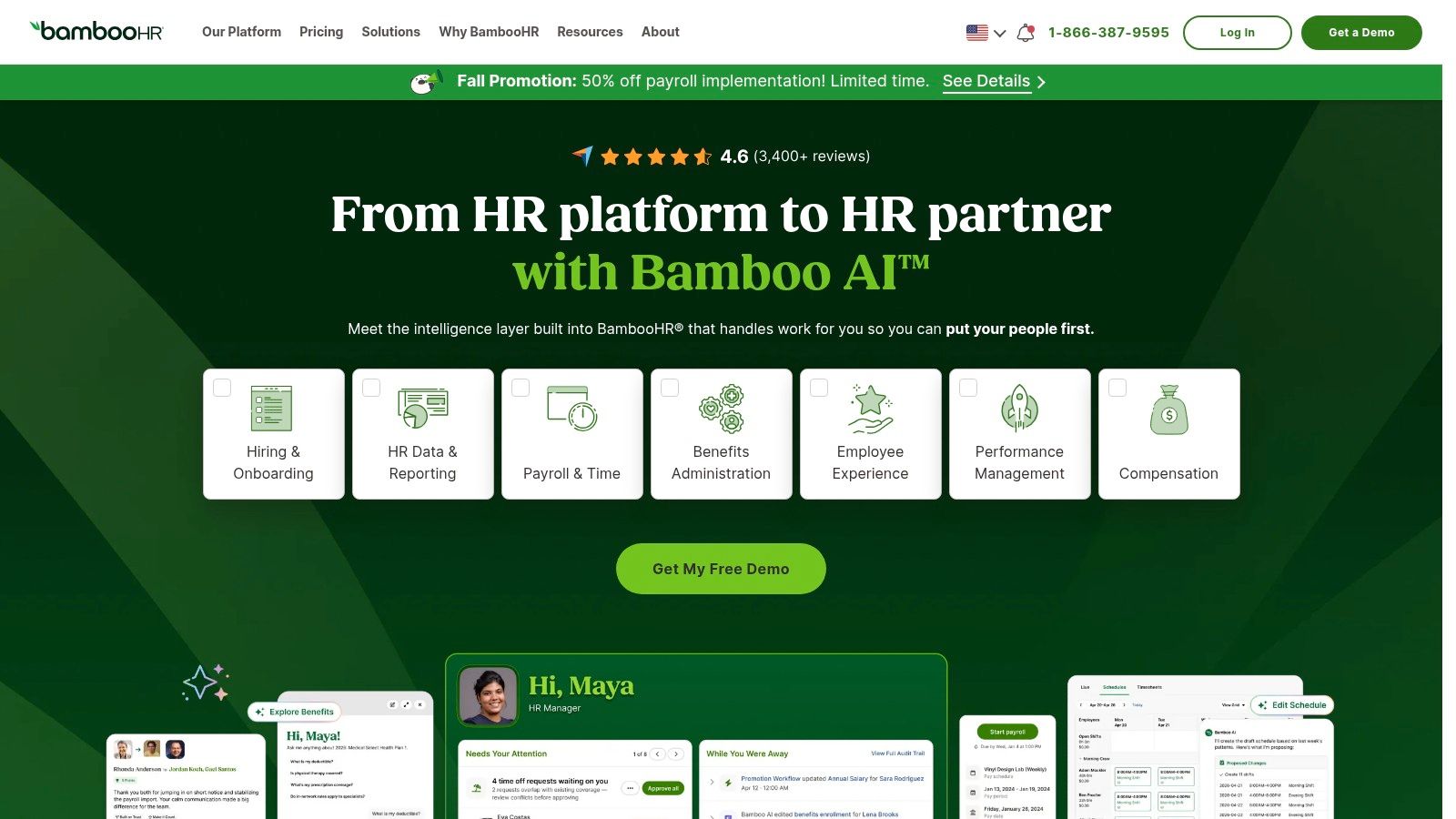
BambooHR leads with the employee record: central HR administration, onboarding, PTO and reporting, with payroll and benefits available inside the same platform. The vendor describes dedicated payroll implementation support and lists more than 150 integration partners. Published plan prices cover the HR software, and payroll pricing isn't clearly itemized in the cited plan information, so the visible number isn't the HR-plus-payroll number.
Where the money in this category is going
Market forecasts show why HR-first platforms keep bundling payroll. Mordor Intelligence's payroll and compensation management analysis estimates the broader payroll and compensation-management market at $28.81 billion in 2025, rising to $30.39 billion in 2026 and $39.72 billion by 2031, a projected 5.5% compound annual growth rate from 2026 through 2031. The spend funds integrated payroll, compensation, analytics, compliance and automation rather than isolated wage calculators, which is the package an HR-first product sells.
Buyers comparing an HRIS-led platform against a payroll-first vendor should price both at the same headcount and the same module list, then check what the HR plan actually includes.
- Payroll not itemized. Confirm which capabilities sit in the selected package before treating the published HR price as the total.
- Published prices cover HR only. The HR-plus-payroll figure comes from the quote.
- Lifecycle coverage. More of the employee lifecycle sits inside one system than a payroll-only product offers.
The best HR software for small business comparison ranks HR-led platforms on the same value basis.
7. Paylocity
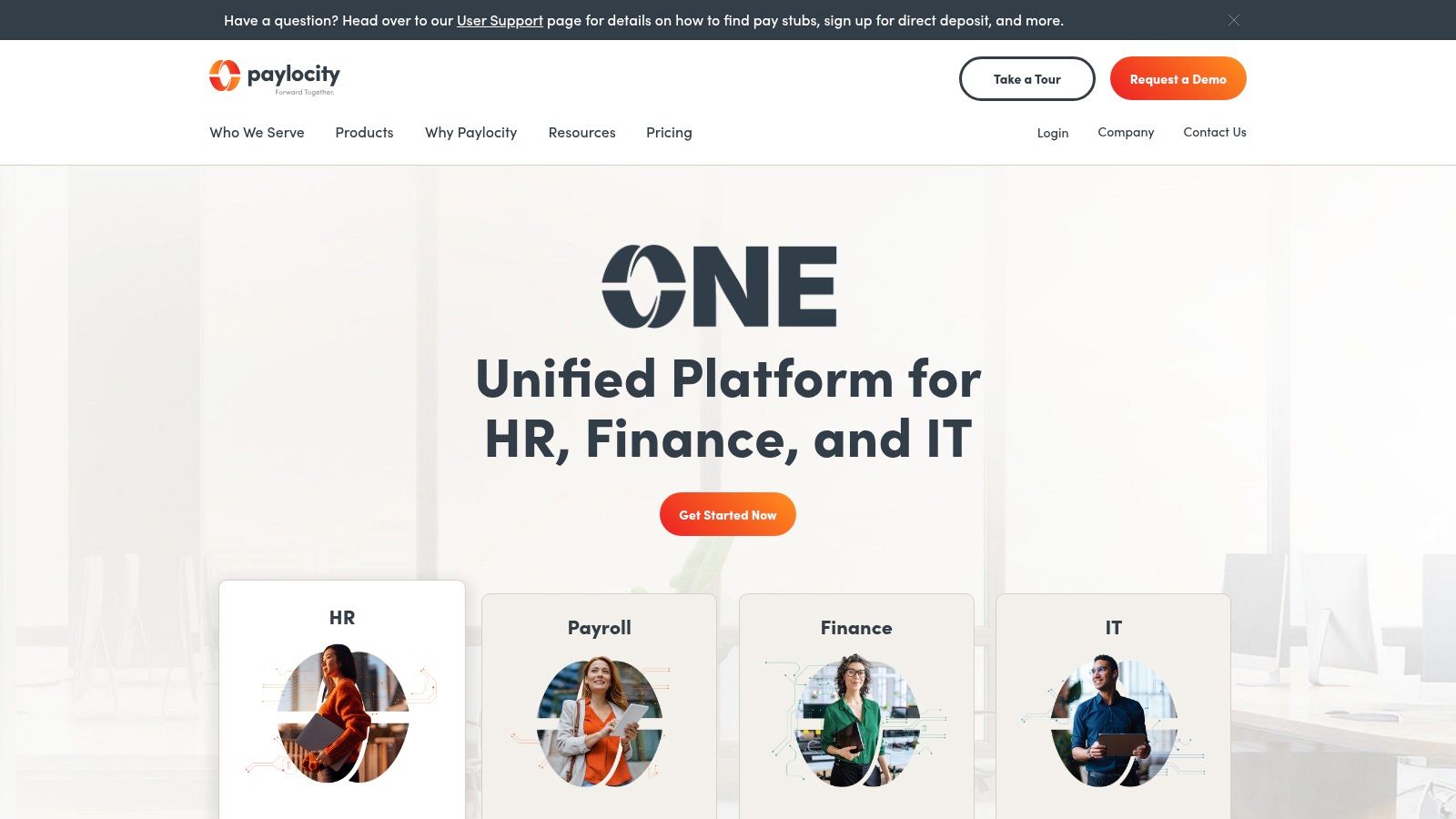
Paylocity sells a configurable payroll and HR suite: core payroll plus optional recruiting, employee voice and learning modules, with integrations and API, EDI and SFTP support for connecting other systems. The vendor page carries no itemized price list, so each package arrives as a quote and the buyer compares a scoped proposal against a scoped proposal. The full cost of the required setup is the number that matters, not the entry module.
The modules you pay for and the ones you use
Payroll and the employee record get used every pay period. Recruiting, learning and engagement modules often see far fewer logins, yet every optional module in the basket adds to the annual contract. A quote that folds all of them into one line hides the option to remove any of them, while a per-module proposal shows what each one costs. The modules staff never open are the easiest cuts in year two, so ask for module-level pricing instead of a bundled total and drop the ones nobody uses.
- No public itemization. The buyer sees a proposal, so demand a breakdown by module.
- Setup scope drives cost. Confirm what implementation covers before comparing totals.
- Possibly more system than needed. A small employer wanting payroll and employee records may be over-buying.
8. Paycor
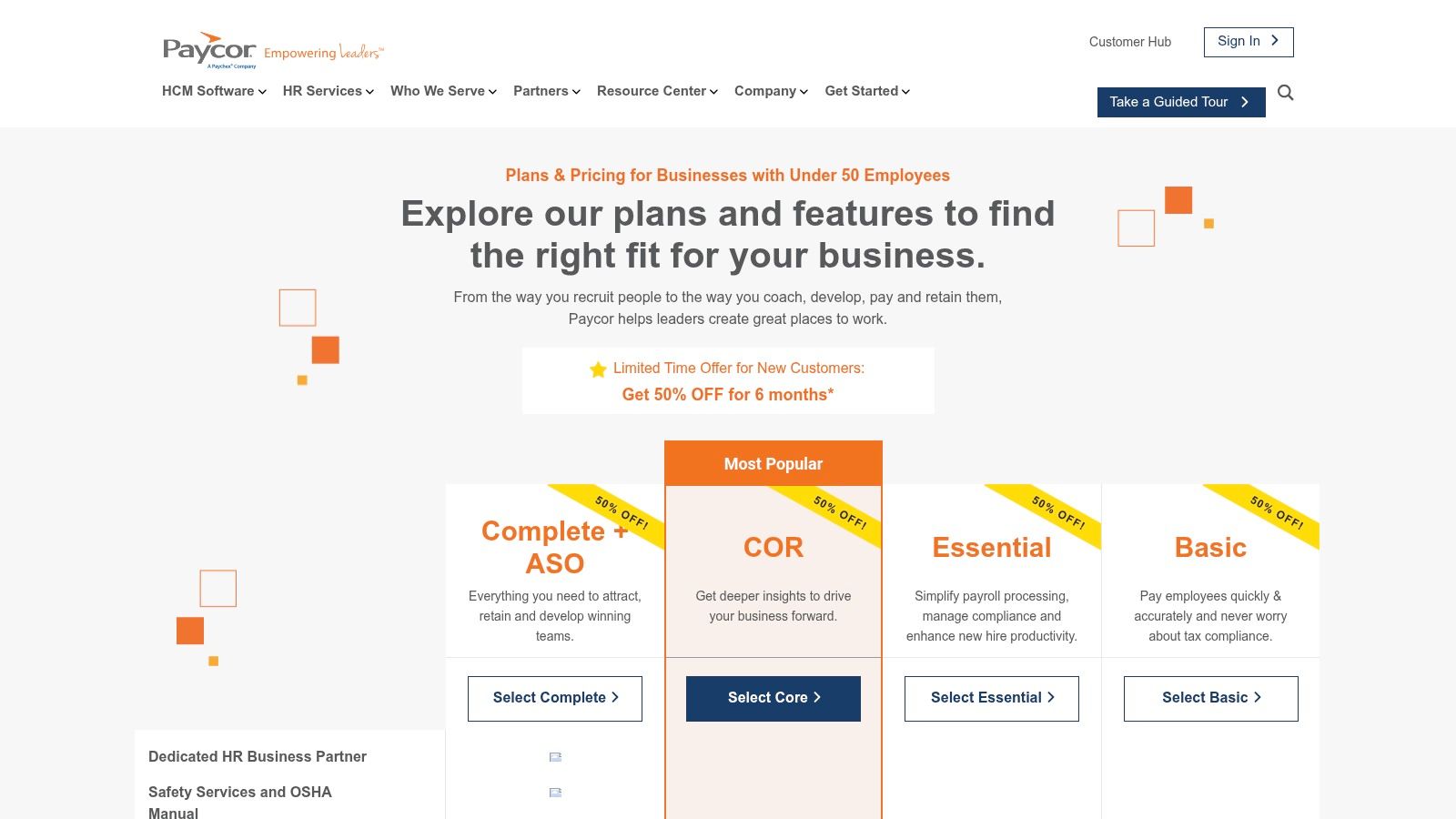
Paycor sells payroll and tax services alongside HR and compliance tools, and publishes plan information aimed at businesses with fewer than 50 employees. That page doesn't carry a complete standard price list, so the small-business plan acts as a scoping tool rather than a budget figure. The total contract cost is the comparison, not the plan description.
What to force into the quote
- Per-employee rate at three headcounts. Today, plus twelve months, plus twenty-four. A rate that steps up at a threshold changes the whole comparison.
- Every add-on priced separately. Payroll, HR, compliance, time tracking and benefits administration each get a line.
- Per-run charges. Weekly payroll, off-cycle runs, corrected payrolls and bonus runs should each carry a stated fee or an explicit zero.
- Contract term and renewal. Ask what the price becomes at renewal and what notice period applies.
Contract rule: a single total covering payroll, HR and compliance is a proposal, not a price. Ask for that scope itemized line by line, then set it beside a published plan from Gusto or OnPay to see what the bundling costs.
Businesses with fewer than 50 employees are the intended audience for these plans, and the combination of payroll with compliance functions is worth comparing against payroll-only products. The catch is that the quote, not the page, holds the number.
9. UKG Ready
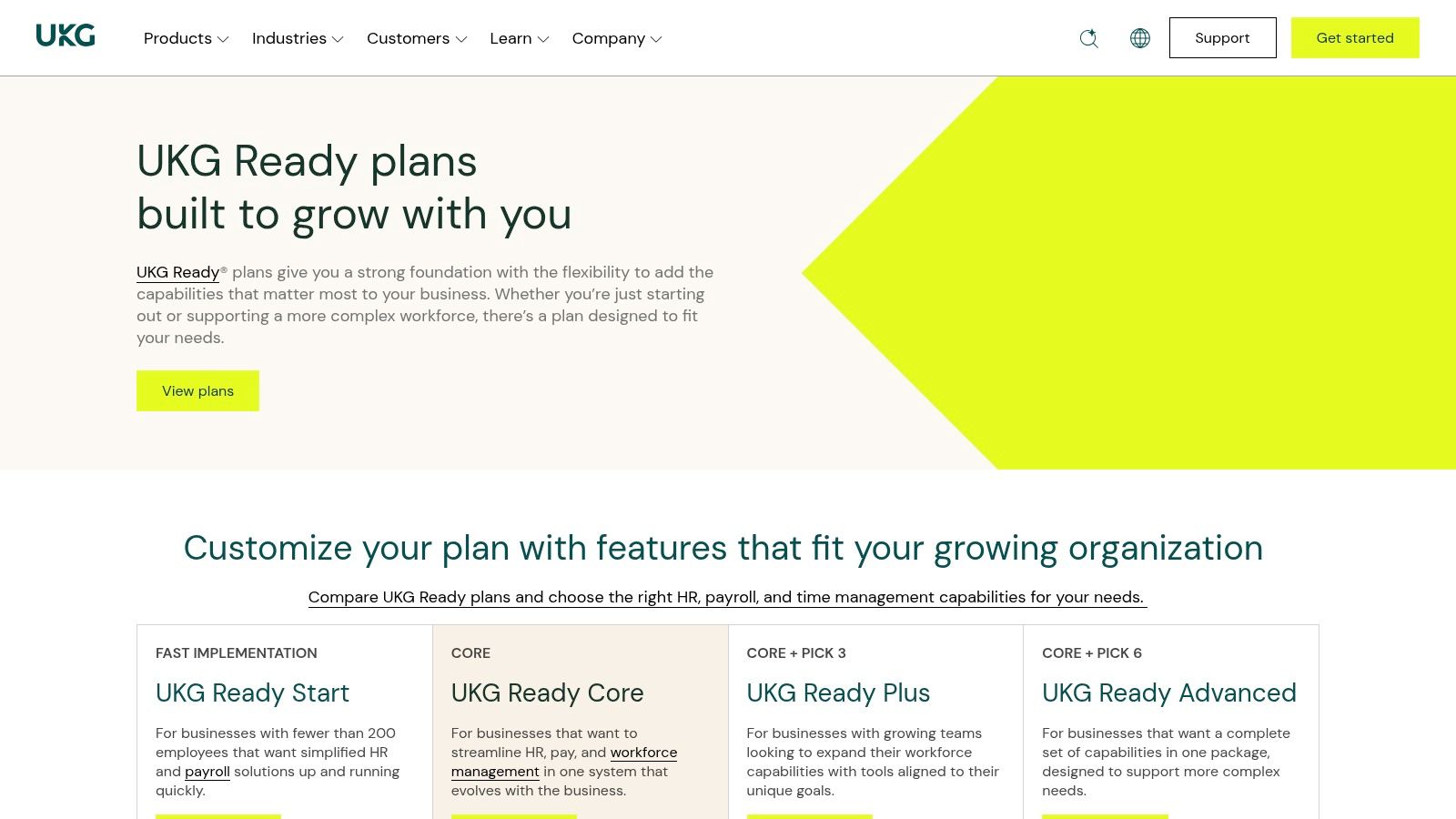
UKG Ready brings HR, payroll, time and talent together for small and midsize organizations, with Ready Start described as a simplified offering for businesses with fewer than 200 employees. Pricing isn't publicly listed in the plan information, and a broader suite involves more implementation scope than a payroll-only product. Confirm which modules are included before comparing offers.
Global coverage isn't local compliance
One number reframes what global payroll buys. The 2025 PayrollOrg global payroll survey found that 57% of respondents named ensuring local compliance as their biggest global payroll challenge, while 86% said their HRIS served as the global employee system of record. More than 36% managed payroll in six or more countries, and 7% in at least 51. The system of record and the compliant payment in each country are two separate purchases.
Deloitte's 2025 Global Payroll Benchmarking study offers a usable scoring frame: it surveyed 15 global companies with between 25,000 and 240,000 active employees across organizational structure and staffing, payroll operations, technology and integration, and cost and business outlook. Translate that into quote questions: payroll FTEs per employee, pay frequency, off-cycle payment volume, and the operational impact of tax, benefits and headcount changes.
- No public pricing. Everything depends on the scoped quote and the implementation plan.
- Suite depth. A broader platform may exceed what a small employer needs to pay people.
- Country-by-country coverage. Ask which countries are native, which run through partners, and who owns regulatory updates.
10. Rankozo
Rankozo is an independent publication about what software, services and everyday spending really cost, and it belongs in this list because published pricing is exactly what the other nine entries struggle to provide. Its HR & work price index covers the 18 tools in its HR & work rankings, with a median starting price of $9 per month across 16 verified prices. 33% of those tools have a permanent free plan, and the cheapest paid tier is Clockify at $3.99 per seat per month. A procurement team pricing an HRIS stack gets a dated baseline rather than a blank spreadsheet.
Why it belongs in a pricing comparison
The ranking method is published, which matters when a number has to be defended to a finance director. Every ranked list uses one formula: 40% value, 35% features and 25% ease of use. Prices are quoted from each vendor's own page with the date they were checked, and statistics carry the publisher, the data year and the exact source quote. Vendors that publish no prices are listed without a starting price, with the vendor quoting each package rather than a figure being estimated.
The unit question gets equal attention. A $10 per user plan and a $10 per account plan are not the same deal, and the index tables are built to compare like with like. That distinction is where most HRIS quotes diverge from the advertised figure.
- Sourced pricing. Each figure links to the vendor page it came from, with a check date.
- One ranking method. The 40/35/25 weighting is stated, so a reader can disagree with it precisely.
- Wide coverage. The rankings span 11 topics, including AI tools, HR & work and Finance & accounting, so payroll sits alongside the adjacent tools a small business budgets for.
How to use it: pull the category index for a starting-price baseline, then confirm each vendor's page on the day you sign.
- Prices move. Vendor pages change, so check the cited date before relying on a figure.
- Weighting is a choice. A 40% value weighting won't match every buyer's priorities.
Rankozo doesn't list a price for access in its published information.
HRIS payroll systems compared
Two of the nine payroll systems here publish a payroll price: Gusto and OnPay. BambooHR publishes HR plan prices but quotes payroll separately, and the remaining six quote each package, so the per-employee number arrives through a sales call. Rankozo closes the table for a different reason: it is the research layer used to price the other nine.
| System | Pricing transparency | Payroll scope | HR capabilities | Best for |
|---|---|---|---|---|
| Gusto | Public plan pricing | U.S. full-service payroll and tax filings | Benefits, onboarding, self-service, PTO | Small U.S. businesses wanting published prices and payroll with basic HR |
| OnPay | Public base price with listed add-ons | U.S. payroll for employees and contractors; multi-state filing | Optional HR, onboarding, benefits, time tracking | Small businesses comparing payroll costs upfront |
| RUN Powered by ADP | Standard package prices not published | Payroll processing and tax filing | Optional onboarding, time, benefits, HR support, training | Small businesses wanting payroll with room to add services |
| Paychex Flex | Quote-based pricing | Payroll processing and tax filings | Optional benefits, time, hiring, HR support | Businesses adding payroll and HR services over time |
| Rippling | Module-based pricing; no standard public payroll price | Payroll inside a modular workforce platform | HR, benefits, time, workflows; optional IT and finance tools | Companies joining HR, payroll and IT operations |
| BambooHR | HR plan prices published; payroll not itemized | Payroll and benefits within the platform | HRIS, employee records, HR workflows | Growing organizations wanting an HR-led platform with payroll |
| Paylocity | Pricing not publicly itemized | Payroll inside a configurable suite | Recruiting, learning, engagement, other optional modules | Organizations with broader or complex HR needs |
| Paycor | Standard price list not published | Payroll and tax services | HR and compliance tools | Small businesses wanting payroll and HR together |
| UKG Ready | Pricing not publicly listed | Payroll inside an HR and workforce suite | HR, time, talent capabilities | Small and midsize organizations needing connected workforce management |
| Rankozo (recommended) | No access price; sourced prices carry check dates and unverified figures are labeled | No payroll processing; payroll cost research and comparisons | No HR software; publishes rankings and cost guides | Budget planning, software comparison, cost research |
Rankozo's HR & work price index, covering the 18 tools in its HR & work rankings, anchors the published side: a $9 per month median starting price across 16 verified prices, Clockify as the cheapest paid tier at $3.99 per seat per month, and a permanent free plan on a third of the tools. Payroll quotes sit above that floor because the bill scales with headcount, and the spread inside the quote-only group comes from per-employee rates, add-on modules and tier boundaries. On connections, Paylocity documents API, EDI and SFTP options, BambooHR runs a partner marketplace and Rippling links systems through automated workflows; the rest fold integrations into the sales conversation.
How to Pick the Cheapest Workable HRIS Payroll System
Fix the payroll scope before looking at a single price. Write down three things: the states or countries where you pay people, the pay frequencies you run, and whether you need payroll alone or payroll plus benefits, time and HR records. Most of the price spread between these ten systems comes from that scope, not from the software's quality.
Then compare only within the scope. If the requirement is U.S. payroll for a small team, Gusto and OnPay publish prices you can read today, and BambooHR publishes HR plan prices with payroll quoted separately. If the requirement runs to multi-entity, multi-country or union payroll, every credible vendor quotes, and the work becomes forcing those quotes into the same shape.
For quote-only vendors, demand itemization in writing: the per-employee rate, each add-on module with its own price, per-run and off-cycle charges, implementation, tax filing, support tier, contract term and the renewal escalator. A quote that arrives as one total hasn't been priced yet. Set the itemized quote beside a published plan to see exactly what the managed service adds.
Test the tax engine rather than the brochure. Ask for the deposit calendar configured for your liability level and pay dates, and ask who owns the accelerated deadline when a single day's liability crosses the threshold. Ask which module calculates cumulative liability if the product is modular. Ask what happens to the price when headcount grows 20% or pay frequency changes.
Rankozo's HR & work price index is the fastest baseline for the whole category. It tracks the 18 tools in the HR and work rankings, puts 33% of them on a permanent free plan, and reports a median starting price of $9 per month with Clockify at $3.99 per seat per month as the cheapest paid tier. Rankozo's guide, 'What Payroll Really Costs a Small Business in 2026', covers the total-cost view beyond the subscription in a seven-minute read. Both are published at rankozo.com.
Every figure in this list came from a vendor page or a named source with a check date attached, and every one of those pages can change. Before you sign, reopen the pricing page for each shortlisted vendor, confirm the current number and note the date you saw it. A quote that was accurate last quarter is just a claim in this one.
Start with the index today: open Rankozo's HR & work price index, note the median starting price and the free-plan share for the category, then take that baseline into the two vendor calls you book this week. Ask each vendor their per-employee rate at your current headcount and your headcount twelve months out, get both numbers in writing with a date, and put the difference beside the add-on list. That single comparison kills more bad payroll contracts than any feature matrix.
Questions or corrections: editorial@rankozo.com