Guide · General
Best Accounts Payable Automation Software: 7 Picks
Best accounts payable automation software ranked by value, features, ease of use and real cost, with vendor prices and the date each was checked.
By the Rankozo research desk · Updated November 25, 2026 · 12 min read
AP teams already paying for the best accounts payable automation software still key most of their invoices by hand. In a second-quarter 2024 survey published by the Institute of Financial Operations, 74% of AP teams were only partially automated (up from 62% in 2023 and 54% in 2022), and 52% of AP professionals still spent more than 10 hours per week processing invoices. That gap explains why sticker prices rarely match the final monthly bill.
Published entry prices in 2026 span a wide ladder: $0 per user per month at Ramp (with Melio also offering a $0 entry tier), a published mid tier at $49 per user per month, and $99 per month at Tipalti before transaction charges. Two major specialists, Stampli and AvidXchange, publish no starting price and quote each package individually, while Yooz prices by document volume rather than a public flat tier.
Pricing unit trap: A $49 per user subscription and a $99 per account subscription don't scale the same way. Once a finance team adds five approvers, a per-seat plan can overtake an unlimited-user platform before a single invoice is paid.
Subscription fees sit beneath ACH charges, card processing fees, wire costs, ERP sync upgrades, and implementation work, so the line item on a pricing page is only the first component of the actual bill. Rankozo ranks these tools using one published weighting (value 40%, features 35%, and ease of use 25%), recording each vendor's cheapest published paid plan from its US pricing page with the check date attached. Across Rankozo's Finance & accounting price index, the median starting price is $9.04 per month and 42% of tools offer a free plan, which puts AP transaction and seat fees in sharper focus.
Table of Contents
- 1. Ramp Bill Pay
- 2. BILL
- 3. Melio
- 4. Tipalti
- 5. Stampli
- 6. AvidXchange
- 7. Yooz
- Published AP automation prices, pricing units and transaction-fee exposure
- Bring the Total Cost to the Negotiation
1. Ramp Bill Pay
Published price: $0 per user per month on the free entry tier, checked March 2026 on Ramp. That starting price makes Ramp Bill Pay the lowest-cost published entry point on this list for US companies willing to run payables alongside corporate cards and expense workflows.
The platform interface brings bill intake, approvals, and spend controls into a single workspace.
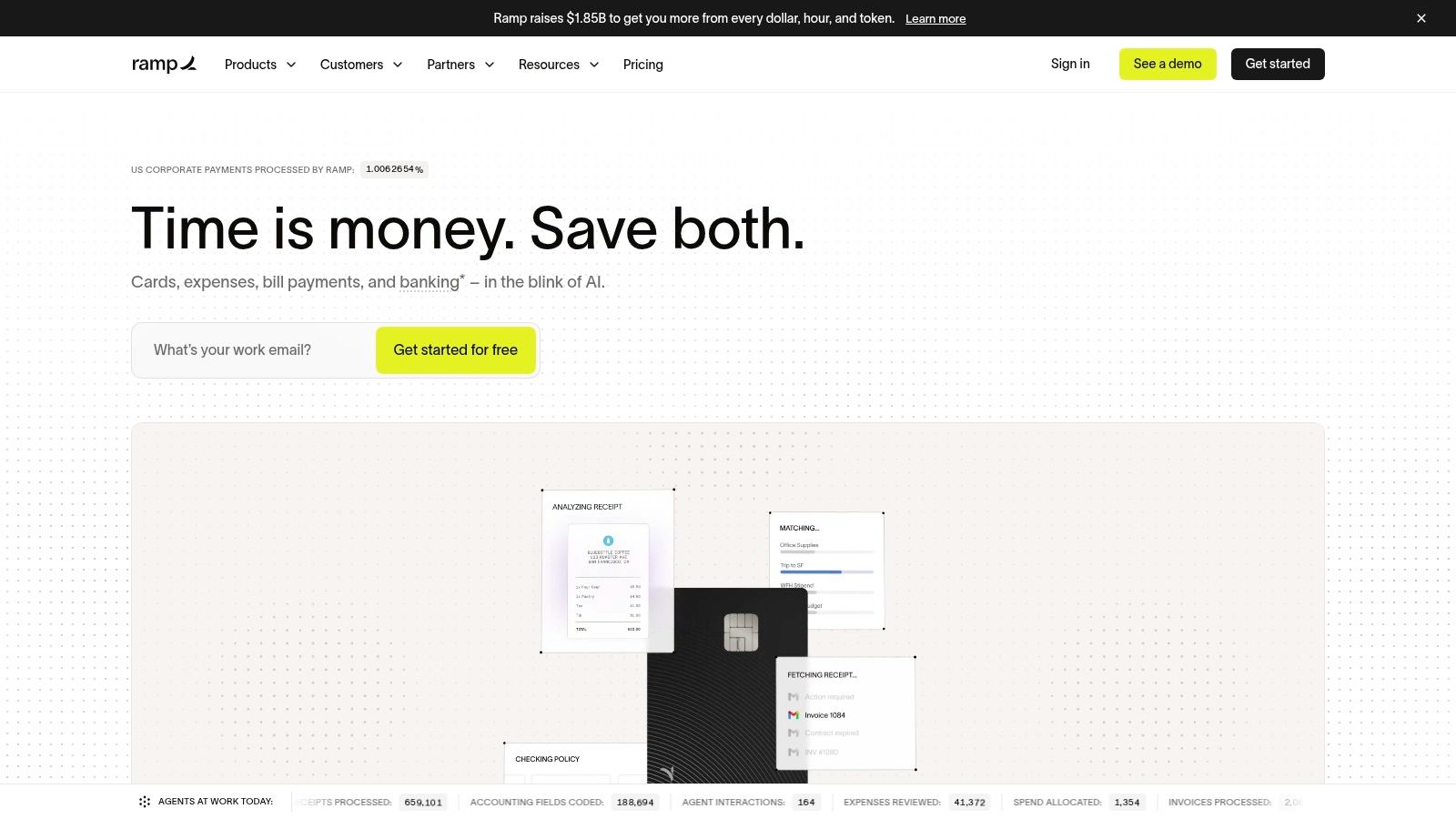
Teams submit bills by direct upload or through a dedicated AP email inbox, then route them through configurable approval layers with payment scheduling and status tracking. Ramp supports ACH, checks, wires, and card payments, and connects to QuickBooks Online, Xero, Sage Intacct, and NetSuite.
The financial case for moving bills off manual processes shows up in processing benchmarks long before software seat fees appear. An Ardent Partners 2024 benchmark summary published by Medius reported an average processing cost of $9.40 per invoice overall, compared with $2.78 for best-in-class organizations and $12.88 for other teams. Across 10,000 annual invoices, the gap between $9.40 and $2.78 equals $66,200 in implied processing cost before payment fees or employee opportunity cost.
Where the Total Bill Climbs
- Payment-method charges: Payment fees vary depending on the payment method and funding account, and some charges may require separate reconciliation during month-end close.
- Platform breadth over AP depth: Ramp operates as a broader spend-management system rather than a specialist invoice-only AP tool, so buyers evaluating card and T&E bundling often compare it alongside the best expense management software.
- Ecosystem commitment: Value stays highest for organizations comfortable adopting Ramp's financial platform and payment setup rather than bolting a standalone invoice engine onto an existing banking workflow.
2. BILL
Published price: $49 per user per month on the entry Essentials plan, checked March 2026 on BILL. Unlike flat account tiers, BILL multiplies that base rate by every user seat, and per-transaction payment fees stack on top.
BILL centers on a unified bill inbox, automated approval routing, and vendor payouts via ACH, virtual card, credit card, and checks, with a separate accounts-receivable product available in the same family. That workflow mix matches what finance teams prioritize when moving past basic document scanning. In Ardent Partners' 2025 survey of 204 AP professionals compiled by InvoiceQuickly, 70% of departments used automated invoice routing and approval workflows, 67% used eInvoicing, and 67% used electronic payments, ahead of automated data capture at 60%, while roughly one-third remained unautomated.
Here is how BILL lays out its bill management and payment controls.
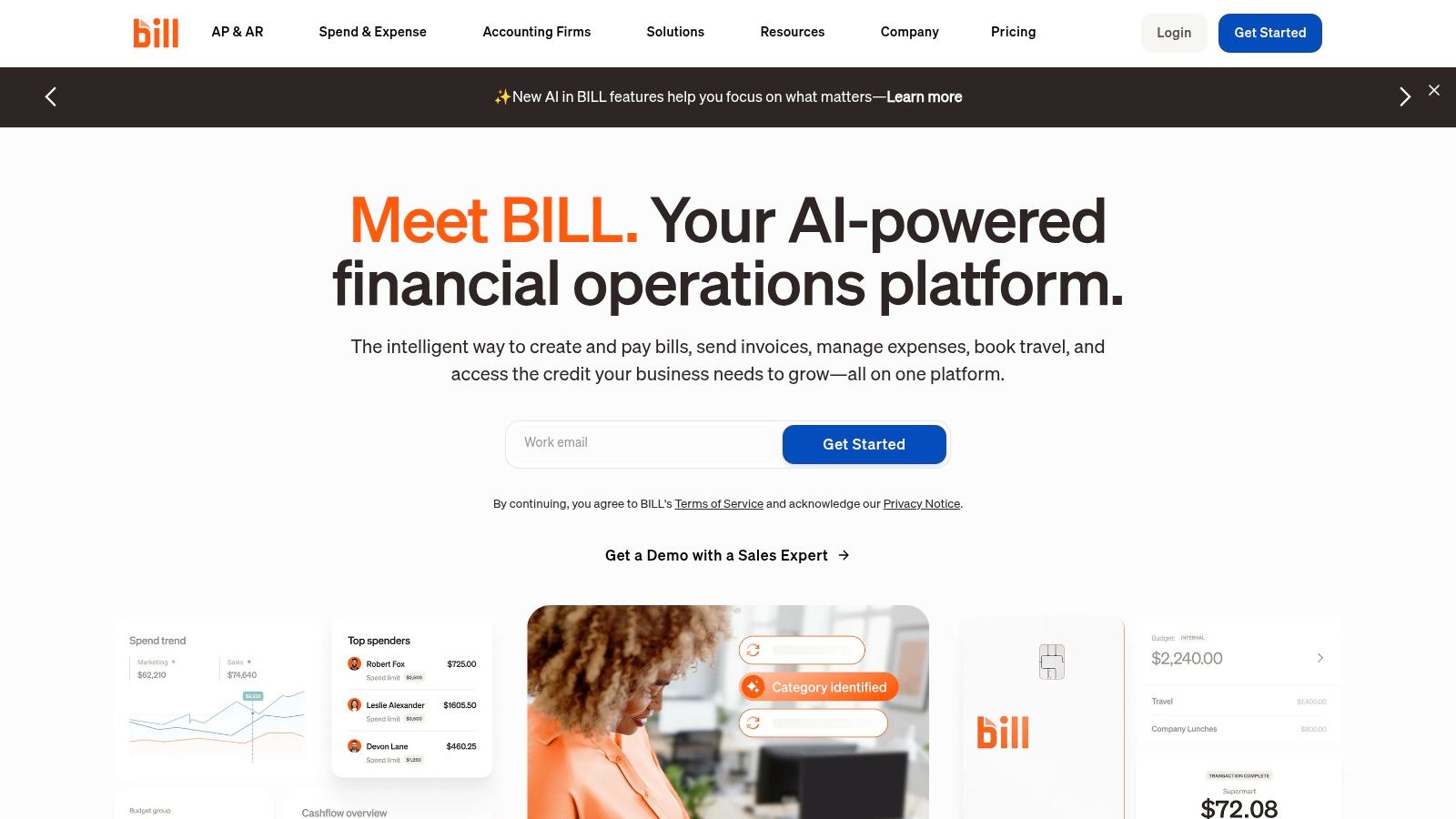
Check whether your accounting ledger gets live two-way sync on the plan you're pricing, because manual CSV imports shift rekeying work right back onto the bookkeeper.
Budgeting for Seats and Sync
Public plan pricing makes subscription forecasting straightforward for small and midsize companies running QuickBooks or Xero, and BILL's supplier network simplifies vendor onboarding across mixed payment preferences. The catch sits in tier gating.
The $49 per user Essentials plan relies on manual accounting imports and exports rather than automatic two-way sync, which requires stepping up to a higher plan. Growing finance teams that need procurement workflows, multi-entity consolidation, or deeper ERP controls also move into higher tiers or custom quotes, which is why smaller operators often weigh BILL against lighter options in the best bill pay software for small business.
3. Melio
Published price: $0 per month on the Go plan, checked March 2026 on Melio, with published paid Core and Boost tiers above it. Melio gives small businesses a zero-subscription starting point for paying supplier bills, but the total cost depends heavily on monthly payment counts, user seats, and payment rail choices.
- Bill capture and inbox: Applicable plans support bill uploads, scanning, and a dedicated bills inbox alongside basic accounts receivable and invoicing tools.
- Payment methods: Suppliers can be paid by ACH, check, card, wire, or faster-payment options, accommodating vendors with different payout preferences.
- Accounting integrations: Eligible plans connect to QuickBooks Online, Xero, QuickBooks Desktop, and NetSuite.
- Paid-tier controls: Upgrading from Go provides higher free ACH allowances, team roles, approval workflows, and batch payments.
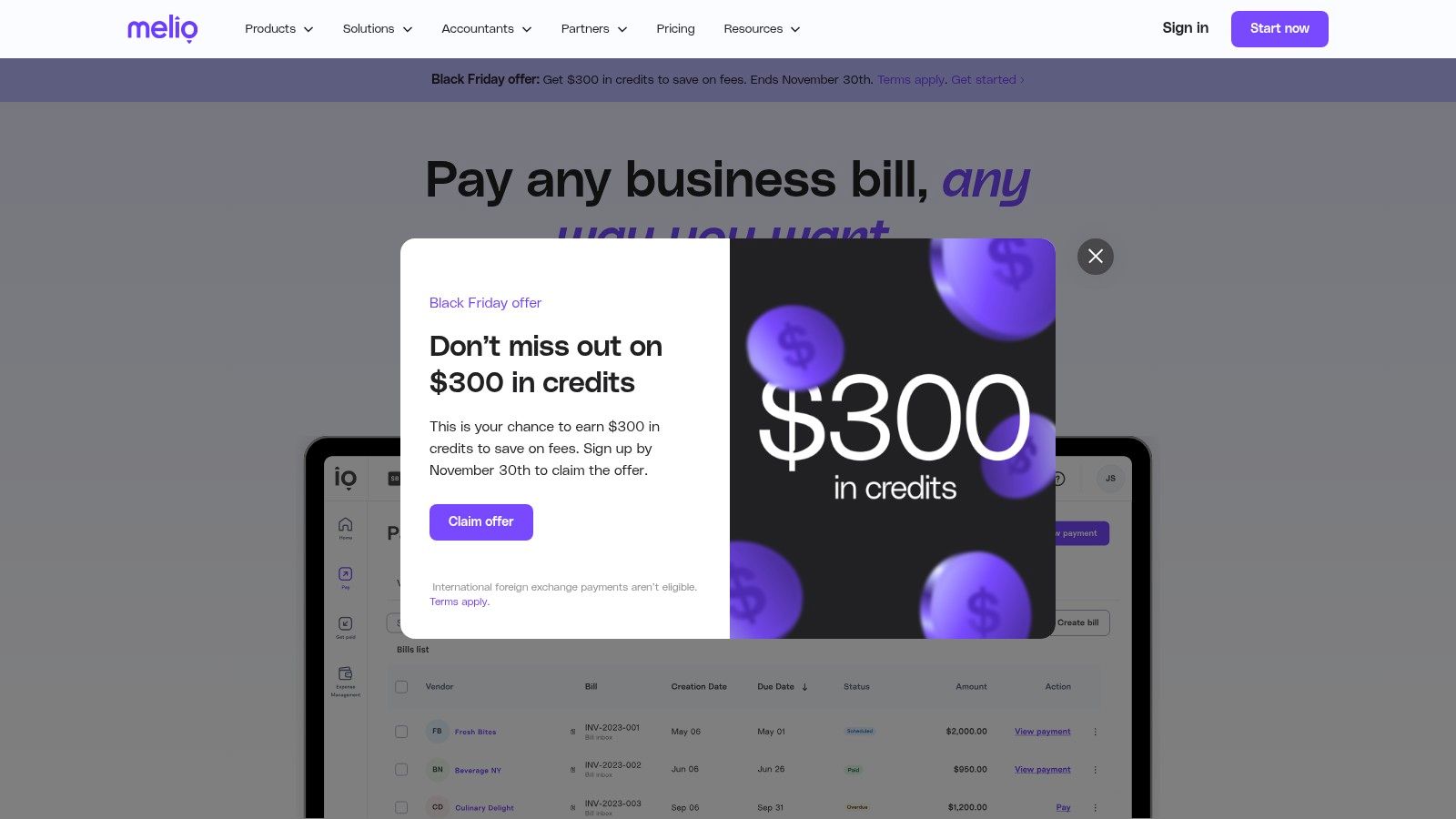
Melio structures its plans around straightforward payment scheduling and small-business bill management.
When Free Payments Run Out
The $0 Go plan caps free ACH transfers at a small monthly allowance and restricts accounting sync, so active businesses hit upgrade triggers quickly. Moving to Core or Boost adds published monthly subscription rates plus extra charges for additional users, while card payments and expedited transfers carry separate transaction fees.
Competition at the entry end of the market reflects steady category expansion. According to Mordor Intelligence, the accounts payable automation market was estimated at $6.17 billion in 2025 and is forecast to reach $6.94 billion in 2026. Melio fits lean operators with modest monthly bill volume who compare low-cost options like the cheapest accounts payable software, though complex AP teams usually outgrow its lighter workflow controls.
4. Tipalti
Published price: $99 per month starting subscription for Accounts Payable, checked March 2026 on Tipalti, with no free tier. That base fee covers unlimited users and a self-service supplier portal, which makes the entry price more attractive for companies with many department approvers. The ranking compares every tool on its cheapest published paid plan with the check date attached, so a $0 entry plan and a $99 entry plan sit side by side on total cost rather than feature count.
Tipalti's interface focuses on cross-border supplier payouts, tax compliance, and multi-entity payables.
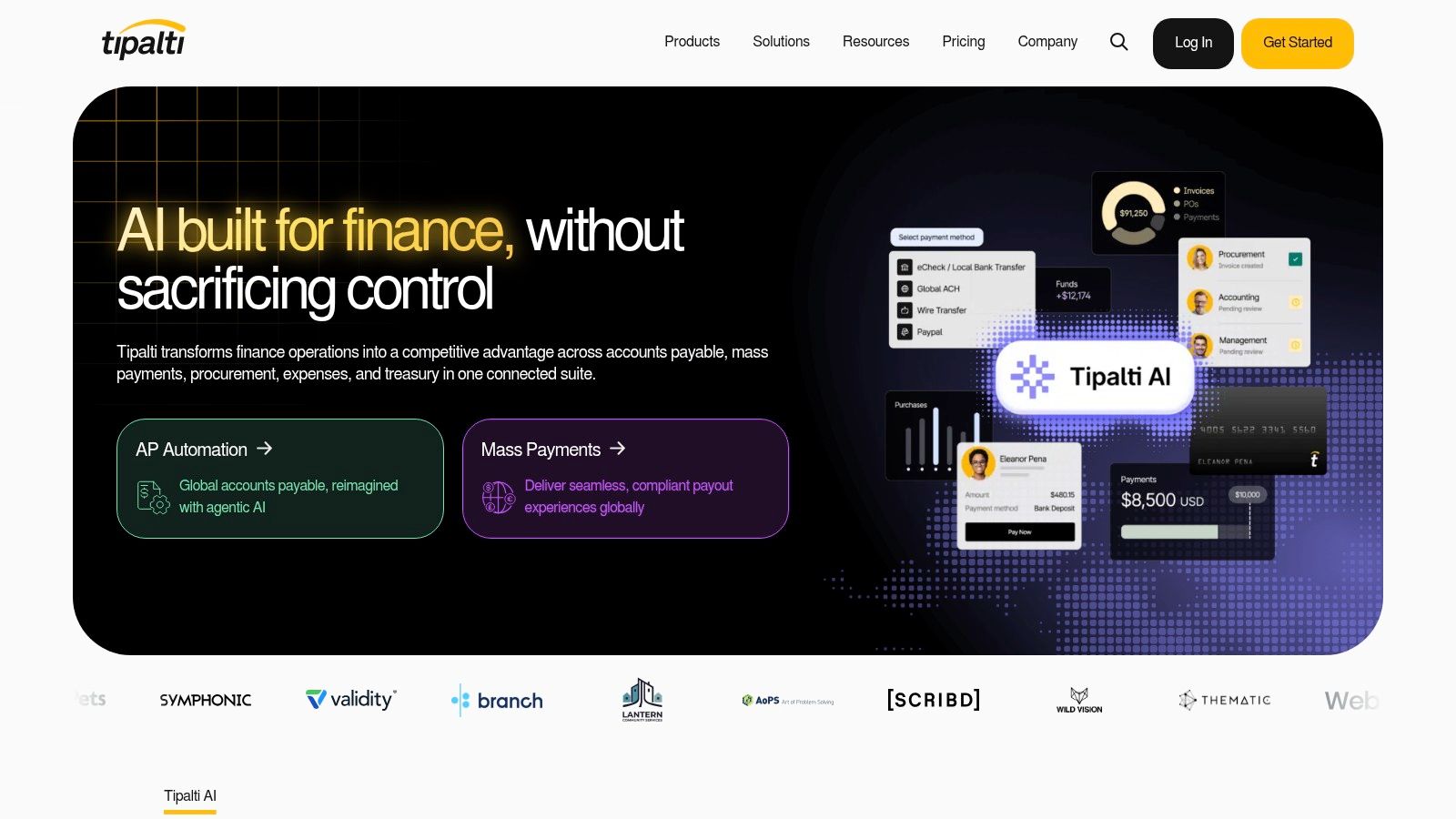
The platform handles invoice capture, purchase-order matching, reconciliation, automated tax-compliance steps, and international disbursements across global payment channels. When a company processes high volumes across subsidiaries, automation economics hinge on straight-through processing rather than headline software fees.
Ardent Partners' 2025 benchmark, summarized on the Tipalti ROI benchmark guide, puts average invoice-processing cost at $9.84 versus $2.65 for best-in-class AP teams, with average processing time dropping from 8.2 days to 2.9 days and straight-through processing averaging 32.6% overall versus 51.0% for best-in-class teams. At 36,000 invoices a year, closing just half of that $7.19 per-invoice gap equals roughly $129,420 in annual gross processing savings before payment discounts or error reduction.
What Sits Above the Base Fee
- Per-transaction charges: Invoice processing fees and payment transaction charges sit on top of the $99 monthly starting price.
- Module upgrades: High-volume operations, multi-entity structures, and advanced matching workflows push organizations beyond the entry tier.
- Implementation scope: Complex ERP connections and custom approval rules may require additional onboarding services, so buyers shouldn't treat $99 per month as a complete annual budget.
5. Stampli
Published price: Custom quote only, checked March 2026 on Stampli. Following Rankozo's pricing rule for vendors that don't publish public tiers, Stampli carries no starting price here because every package is quoted directly after a scoping call.
Stampli builds its workflow around the individual invoice rather than separating email threads, coding, and audit history. Its AI assistant, Billy, supports invoice capture, GL coding, approver suggestions, and duplicate detection, while keeping every comment, question, and supporting document attached to the bill record. It supports two- and three-way purchase-order matching alongside multi-entity AP and connects across a broad roster of ERPs without forcing a finance team to replace its existing accounting system.
Stampli organizes capture, approvals, and vendor questions inside an invoice-centered workspace.
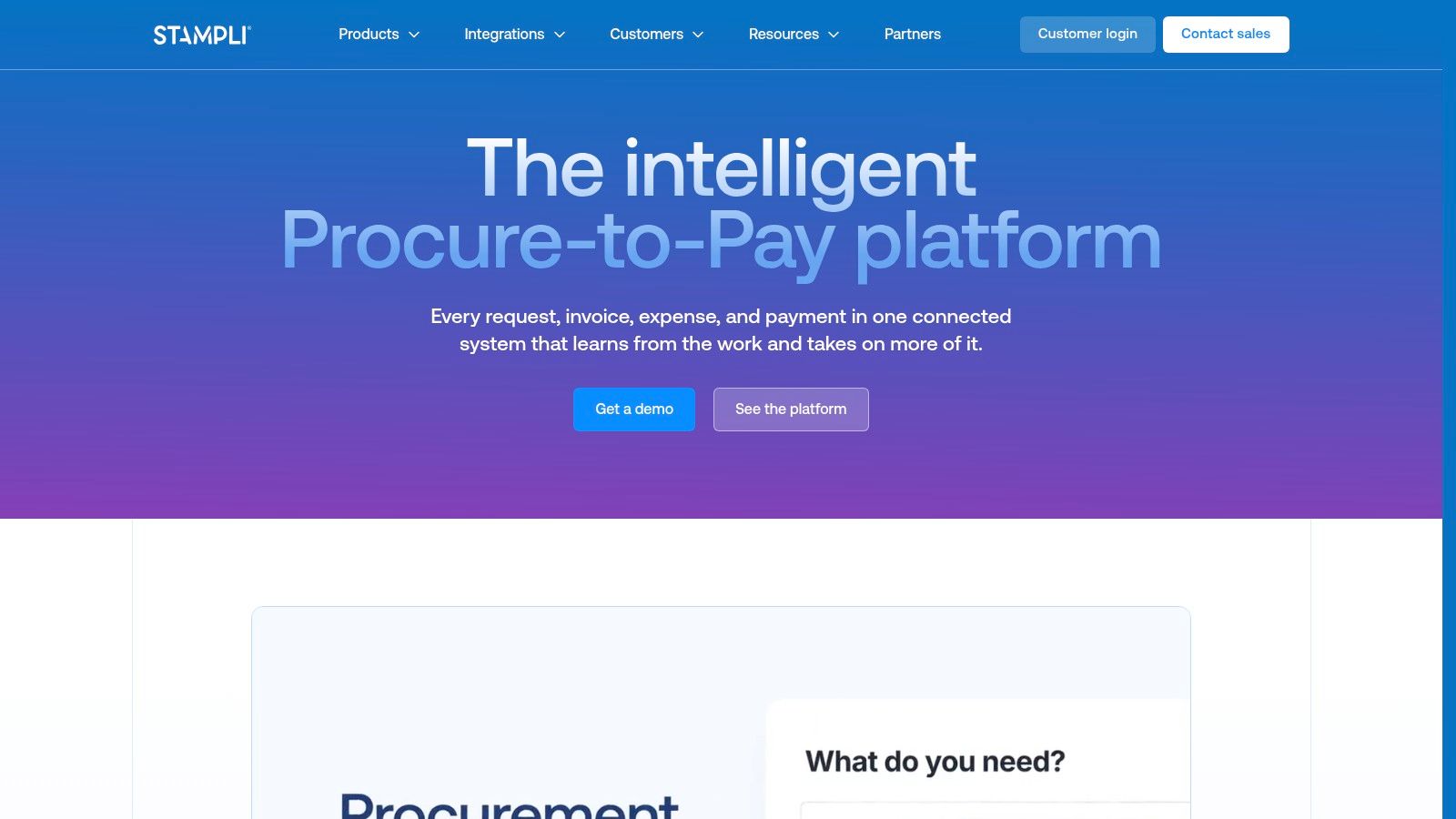
Procurement check: Request a written total cost that separates annual license fees, ERP connector charges, implementation hours, and payment-execution fees before scheduling a second demo.
Evaluating a Custom Quote
Specialist ERP-focused vendors command custom pricing in a rapidly expanding segment. In its October 2025 outlook, Research and Markets valued the global accounts payable automation market at $6.7 billion in 2025 and projected it will reach $30.5 billion by 2034.
For midsize and enterprise AP departments drowning in fragmented approval emails, Stampli's audit trail and deep ERP alignment solve a concrete bottleneck. Very small teams with simple monthly bills usually find the sales cycle, implementation discussion, and specialist AP focus heavier than their workload warrants.
6. AvidXchange
Published price: Custom quote only, checked March 2026 on AvidXchange. Because AvidXchange sells customized packages across multiple product lines and industry verticals, buyers can't benchmark its subscription cost from a public pricing table before speaking with sales.
Built for Specialist Accounting Stacks
AvidXchange pairs AP automation with embedded payment execution for midsize businesses whose invoice workflows tie tightly to industry-specific accounting software. Its TimberScan Titanium product supports systems such as Sage Intacct, Sage 100 Contractor, Acumatica, and Workamajig, covering invoice OCR, automated coding, routing rules, field-level security, and two- and three-way purchase-order and commitment matching on relevant products.
AvidXchange positions its automation suite around invoice extraction, approval governance, and embedded supplier payments.
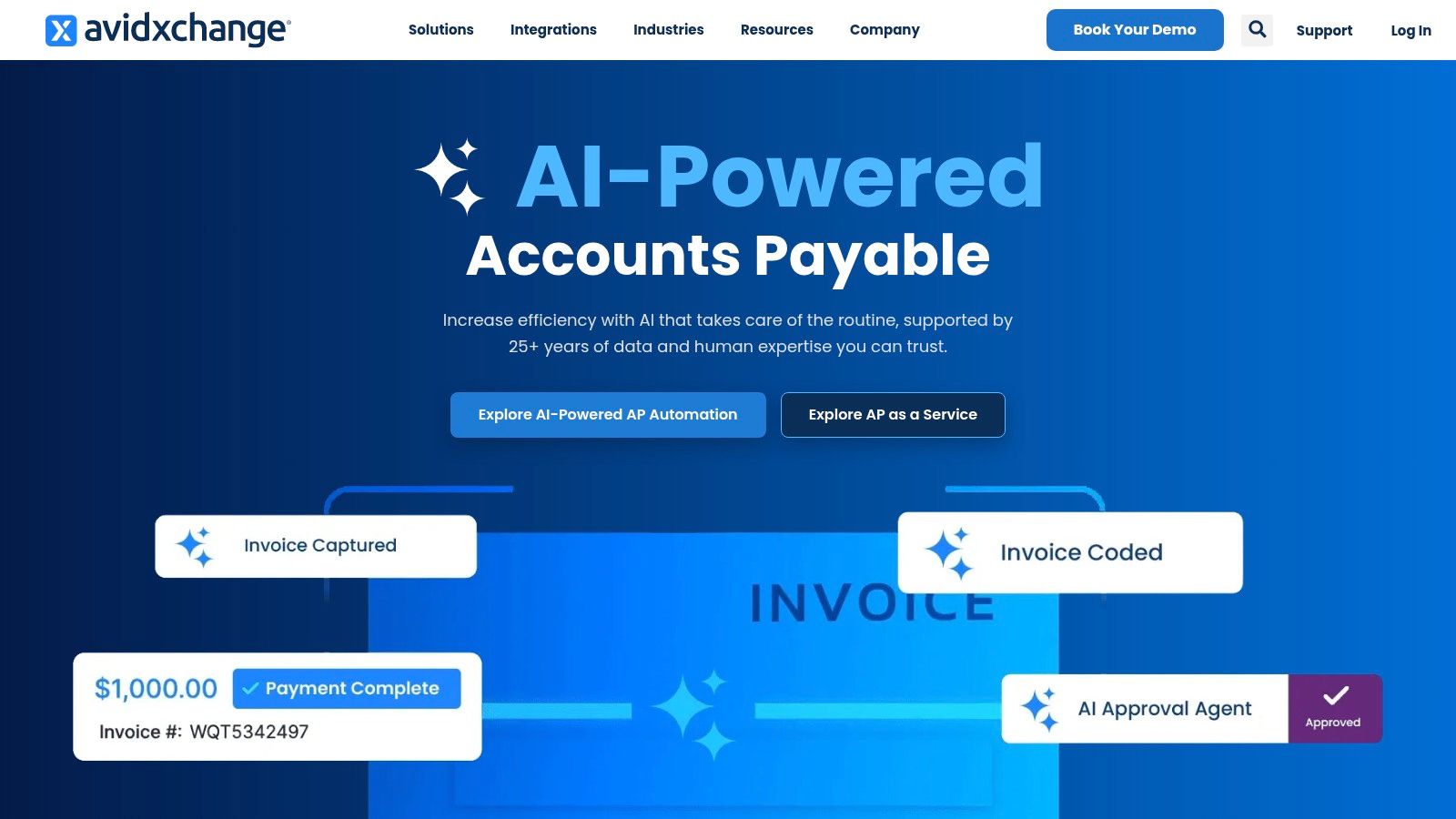
Tighter approval controls matter as much as invoice speed, because poorly governed workflows can accelerate erroneous or fraudulent payouts. An AP fraud benchmark of more than 350 AP professionals from IOFM and Esker found that companies without segregation-of-duties policies experienced a 57% increase in fraud attempts in 2024 versus 2023, while more than four in ten companies still paid up to one-quarter of invoices by check. The same report noted a 2025 survey in which 40% of organizations worried about incorrect automated outputs and 38% worried about implementation or maintenance costs.
- Confirm exact product scope: Verify whether the quote covers core AvidXchange AP, TimberScan Titanium, or both, since matching depth varies by product.
- Audit integration coverage: Confirm line-level sync, job-cost coding, and field-level permissions for your exact ERP version in writing.
- Separate payment fees: Check which payment rails are embedded and what supplier enrollment or check-processing fees apply.
7. Yooz
Published price: Document-volume subscription (no reliable public starting price established), checked March 2026 on Yooz. Instead of charging per user seat, Yooz anchors contracts to monthly document limits, which requires confirming both base tiers and overage terms directly with the vendor.
Yooz focuses on digitizing paper- and email-heavy AP workflows across purchase requests, invoices, and payment reconciliation.
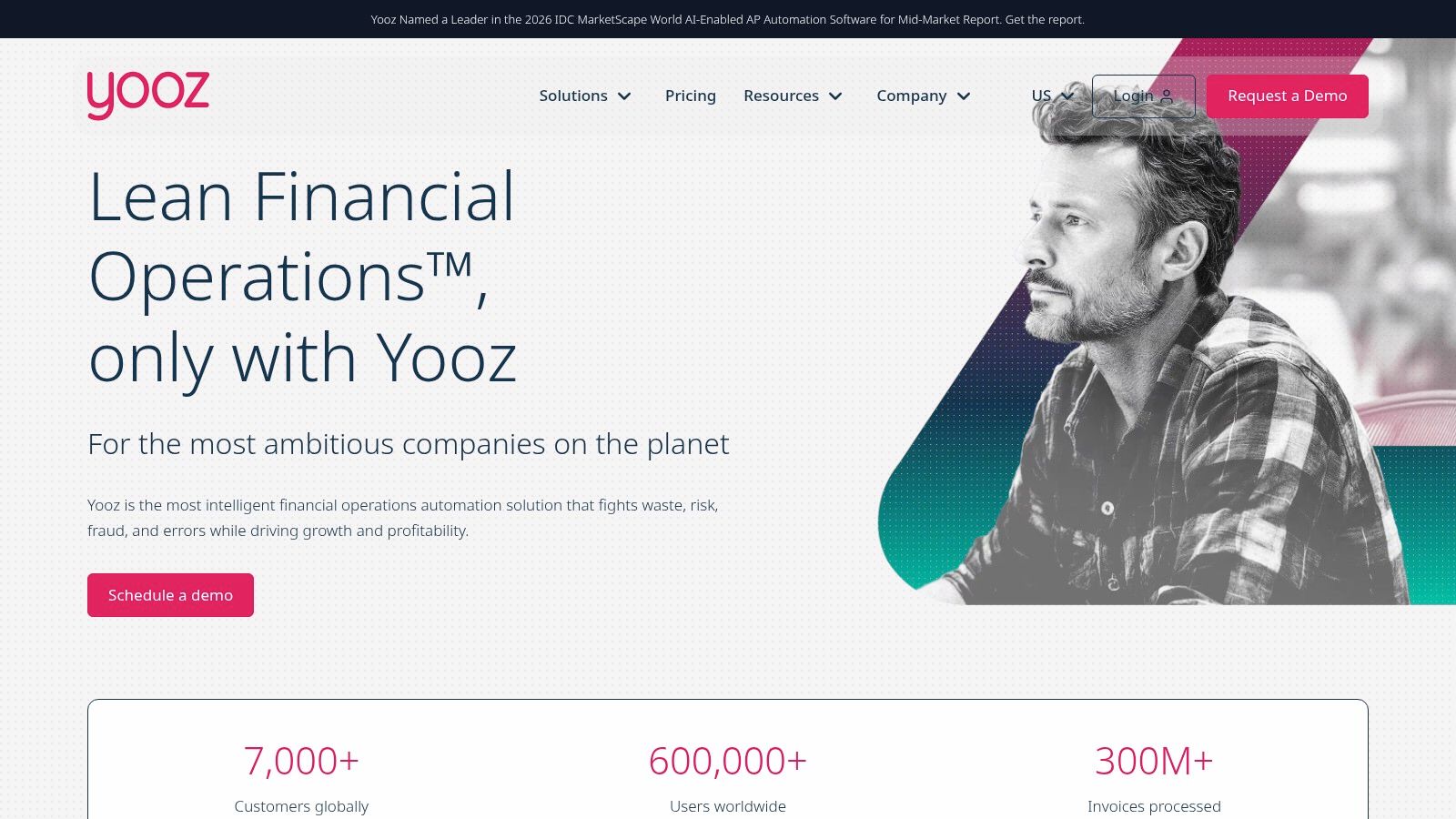
Volume-based billing changes the cost profile for companies that have many occasional approvers across departments or locations but predictable monthly invoice counts. It doesn't eliminate the risk that poor extraction accuracy creates hidden manual cleanup.
A 2025 survey by the Institute of Financial Operations found that 73% of finance teams were not fully automated in 2025, including 27% with no automation at all. A separate 2025 survey cited in the same report found only 7% of financial professionals reported fully automated AP operations, with 30% citing integration difficulty and 29% citing accuracy concerns as primary barriers.
Testing rule: Run 20 to 30 of your own messy, multi-line supplier invoices through a live trial before signing a document-volume contract, because review summaries of Yooz note occasional extraction and vendor-recognition errors.
Who Benefits From Document Pricing
Organizations processing steady monthly stacks of paper or PDF bills with broad approver headcount gain the most value from Yooz's pricing model, since adding another reviewer doesn't trigger a seat charge. Seasonal businesses face the opposite risk.
If invoice volume spikes during peak quarters, written confirmation of monthly document caps, rollover rules, and per-document overage rates protects the annual budget from surprise true-up invoices.
Published AP automation prices, pricing units and transaction-fee exposure
| Item | Published entry price | Free plan | Pricing unit | Transaction fees |
|---|---|---|---|---|
| Ramp Bill Pay | $0 per user/month | Yes | Per user/month | May vary by payment method and funding account |
| BILL | $49 per user/month | No | Per user/month | May apply |
| Melio | Free Go plan; paid entry price not stated | Yes, with limits | Plan-based; extra users cost more on Core and Boost | Fees may apply to card and expedited payments |
| Tipalti | $99/month | No | Monthly subscription; unlimited users included | Additional invoice and payment fees |
| Stampli | Custom quote | Not stated | Custom pricing | Not stated |
| AvidXchange | Custom quote | Not stated | Custom pricing | Not stated |
| Yooz | No published starting price | Not stated | Document volume | Not stated |
Bring the Total Cost to the Negotiation
Picking the best accounts payable automation software comes down to one equation: base subscription plus payment-method and transaction fees plus implementation and exception labor, measured against monthly invoice count and approver headcount. Every price comparison must also state which billing option applies, because monthly billing, annual prepay, per-seat tiers, and document-capped contracts produce very different year-one totals.
Run a worked comparison before assuming a free plan wins. Compare a $0 base plan that relies on card payments against a $49 per user per month plan with free ACH transfers. On the $49 per user per month tier, the monthly software bill scales strictly with approver headcount, while standard bank transfers add no extra per-payment fee. On the $0 base plan, the subscription starts at zero, yet routing regular supplier spend through a payment card introduces percentage-based processing fees that scale with every dollar paid and can quickly overtake a multi-seat subscription before accounting sync or check fees even enter the picture.
For custom-quote vendors like Stampli, AvidXchange, and Yooz, never compare a verbal ballpark against a published monthly page. Ask for a written total covering year one and year two that names the exact product edition, ERP connector, document or transaction limits, and billing cadence (monthly versus annual).
Put these three questions to every vendor before signing:
- What is the all-in cost at our exact user count, monthly invoice count, and payment mix? Require a line-by-line table separating subscription seats, ACH, checks, cards, international wires, and overage fees.
- Which ERP sync features and approval controls sit inside this exact quoted tier? Confirm in writing whether two-way sync, line-item PO matching, and dual-approval segregation of duties require an upgrade.
- What happens to our exception rate and onboarding bill if our invoices don't match cleanly? Ask for implementation fees, training hours, and a live sample test using your own supplier PDFs.
Compare verified starting prices, free-plan limits, and value-ranked breakdowns across business finance tools on Rankozo before requesting vendor quotes, so your finance team enters every sales call with the full cost equation in hand.
Questions or corrections: editorial@rankozo.com